

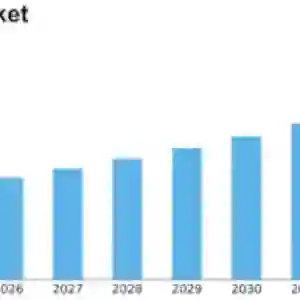
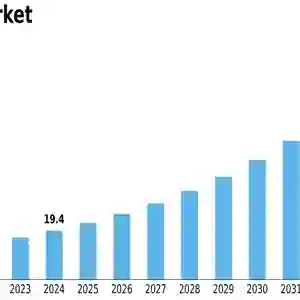
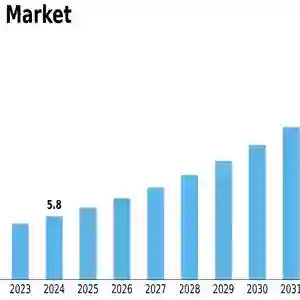
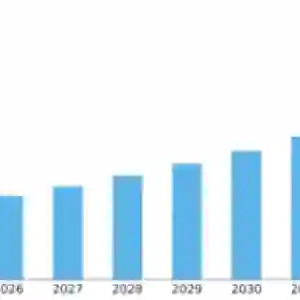
Across global defense sectors, military drones are increasingly recognized as essential platforms for securing borders, coastlines, and high-risk zones. With projecting the military drone market to grow from USD 14.37 billion in 2024 to USD 30.53 billion by 2035, security agencies are accelerating their adoption of unmanned aerial systems to ensure continuous monitoring of sensitive regions. Border protection agencies deploy drones for real-time surveillance, early threat detection, and rapid response to illicit activities such as smuggling, infiltration, and illegal trafficking. Their ability to cover vast distances without fatigue and to operate in difficult terrain makes them ideal for countries with complex land or maritime boundaries. As geopolitical tensions heighten, governments are investing heavily in persistent surveillance systems to strengthen national security infrastructures.
Maritime forces rely on drones for naval reconnaissance, anti-piracy missions, and monitoring of Exclusive Economic Zones. High-altitude long-endurance drones equipped with advanced radars, thermal imaging cameras, and synthetic aperture radars deliver critical data needed to track vessels, identify unauthorized activities, and respond to emergencies. For nations with extensive coastlines, drones drastically reduce the cost and manpower required for aerial patrolling. The integration of drones with naval command centers ensures seamless communication, real-time tracking, and enhanced maritime situational awareness. Meanwhile, hybrid-powered drones with extended flight endurance have become valuable assets for long-range maritime missions, enabling extended monitoring without refueling, which improves operational continuity.
Technological advancements are further expanding the adoption of drones in security missions. AI-assisted analytics, live video transmission, and automated threat detection enhance border surveillance accuracy. Drones equipped with multi-spectral sensors can detect camouflaged objects, human movement in remote terrain, and anomalies across complex geographic environments. Nations facing cross-border conflicts or maritime disputes increasingly consider unmanned systems a strategic force multiplier. North America and Asia-Pacific lead adoption as both regions face unique border security challenges, including contested territories and critical maritime chokepoints. With rising demand for enhanced surveillance infrastructure and the growing sophistication of drones, the military drone market is expected to remain on a strong upward trajectory.
Table of Contents
- Executive Summary
- Market Introduction
- Market Dynamics
- Market Segmentation
- Regional Analysis
- Competitive Landscape
- Future Outlook
- Conclusion
- Appendix
About
At (MRFR), we enable our customers to unravel the complexity of various industries through our Cooked Research Report (CRR), Half-Cooked Research Reports (HCRR), Raw Research Reports (3R), Continuous-Feed Research (CFR), and Market Research & Consulting Services. MRFR team have supreme objective to provide the optimum quality market research and intelligence services to our clients. Our market research studies by products, services, technologies, applications, end users, and market players for global, regional, and country level market segments, enable our clients to see more, know more, and do more, which help to answer all their most important questions.
Contact Us
(part of Wantstats Research and Media Private Limited), 99 Hudson Street, 5Th Floor, New York, New York 10013, United States of America
𝐂𝐨𝐧𝐭𝐚𝐜𝐭 𝐍𝐮𝐦𝐛𝐞𝐫: +1 (855) 661-4441 (US) | +44 1720 412 167 (UK) | +91 2269738890 (APAC)