
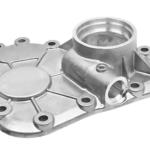


Carbon awareness is increasingly shaping purchasing decisions in automotive aluminum die casting. Buyers and suppliers are balancing sustainability, quality, and cost, with EV programs accelerating the shift toward low-carbon solutions.
In recent years, carbon emissions have started influencing automotive aluminum die casting procurement decisions in ways few suppliers expected. Where buyers once focused almost exclusively on cost, strength, and delivery, OEMs—particularly in Europe—are now requesting carbon data at the quotation stage. While not universally mandatory, these requests are becoming part of technical evaluations. Not every buyer has embraced this shift; some programs still prioritize stable pricing over emissions numbers, especially in cost-sensitive vehicle projects.
Material choice is no longer a simple “green versus not green” decision. Recycled aluminum might seem the obvious solution, but inconsistent scrap quality can affect casting stability and surface consistency, especially in thin-wall parts. As a result, many factories rely on a mixed approach rather than 100% recycled input. Process improvements, such as reducing molten aluminum holding times, reusing machining chips, stabilizing die temperatures, and optimizing production schedules, often contribute more to carbon reduction than changing materials alone. Even small scrap reductions can have a larger environmental impact than swapping alloy types.
Quality control remains a limiting factor in fully transitioning to low-carbon practices. Impurities, minor variations in iron or copper, and the risk of rejected batches make many factories cautious about increasing recycled content. In practice, suppliers are balancing environmental targets, production stability, and customer quality expectations. This balancing act defines today’s automotive aluminum die casting industry more than any single technology.
EV programs are accelerating adoption of low-carbon solutions, particularly for high-volume components like battery housings and structural frames. However, the approach varies: some EV brands require detailed carbon reporting, while others remain cost-focused. Suppliers often adjust strategies based on the customer rather than the product, making industry evolution uneven. Even when carbon reduction is not mandatory, traceability is quietly becoming a hidden requirement. Buyers increasingly ask for information on scrap origin, alloy composition, and energy sources used in melting, pushing suppliers—especially smaller foundries—toward greater transparency.
The automotive aluminum die casting industry has not yet fully entered a carbon-neutral era. It is in transition, with factories moving at different speeds. For buyers, sourcing decisions are no longer purely technical—they have become strategic, particularly in long-term vehicle programs where sustainability, cost, and quality intersect.