


Revenue Growth Outlook
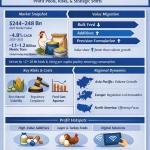
The Global Poultry Feed Market is a critical component of the worldwide poultry protein value chain. According to Maximize Market Research, the market was valued at USD 244.02 billion in 2025 and is projected to reach USD 339.07 billion by 2032, expanding at a CAGR of 4.8% during 2025–2032. The report covers historical data from 2020 to 2025 and provides forecasts for 2026–2032.
The expansion is supported by rising poultry meat consumption, urbanization, increasing demand for affordable animal protein, industrialization of poultry farming, and greater emphasis on feed conversion efficiency. Feed typically represents 60–70% of total poultry production costs, making feed optimization a major determinant of poultry-farming profitability.
Market Overview
The poultry feed market extends beyond the production of basic animal feed. Feed quality directly affects bird health, mortality, growth rates, feed conversion ratio (FCR), production costs, regulatory compliance, and farm profitability.
Global poultry feed consumption is estimated at more than 600–650 million metric tons annually. Poultry remains an attractive protein source because of its efficient feed-to-protein conversion, relatively short production cycle, affordability, and broad consumer acceptance.
Major Growth Drivers
Rising Poultry Protein Consumption: Growing populations, urbanization, and increasing demand for affordable protein are supporting poultry production and, consequently, feed consumption.
Industrialization of Poultry Farming: Commercial farms and integrated poultry companies are increasingly replacing fragmented production models with organized, technology-enabled operations.
Feed Conversion Efficiency: Producers are focusing on improving FCR because even small improvements can have a direct impact on production economics.
Growth of Feed Additives: Enzymes, amino acids, probiotics, acidifiers, vitamins, and antioxidants are becoming increasingly important as producers seek better nutrient utilization and alternatives to antibiotic growth promoters.
Expansion in Emerging Markets: Asia Pacific, particularly China and India, remains a major consumption center because of its large poultry population and expanding demand for animal protein.
Emerging Trends
The market is shifting from a focus on the lowest feed price toward the lowest cost per kilogram of poultry meat produced. Precision nutrition, digital formulation, antibiotic-free feed, sustainability, alternative proteins, and advanced feed additives are becoming increasingly important.
Another significant trend is the migration of value from bulk feed volume toward formulation intelligence and specialized additives. The report identifies additives such as enzymes, amino acids, and probiotics as important value-growth areas.
Industry Challenges
Raw material volatility remains one of the industry's biggest challenges. Corn, soybean meal, and wheat account for approximately 70–75% of feed formulation costs, exposing producers to climate conditions, trade restrictions, currency movements, and commodity-price fluctuations.
Regulatory requirements relating to antibiotic use, feed hygiene, traceability, and sustainability are also changing competitive dynamics. These requirements can increase formulation costs while creating opportunities for technology-driven suppliers.
Scope and Methodology
The Maximize Market Research study evaluates the Global Poultry Feed Market through market size assessment, demand analysis, production and consumption analysis, regional evaluation, segmentation, competitive positioning, industry dynamics, and technology assessment.
The report covers:
- Historical market data from 2020–2025
- Base year analysis for 2025
- Forecast period of 2026–2032
- Market size and forecast in USD billion
- Regional and country-level analysis
- Poultry type and feed-form analysis
- Ingredient and additive assessment
- Distribution-channel analysis
- End-user analysis
- Competitive landscape and company profiling
- Industry trends, drivers, restraints, opportunities, and challenges
- Technology and product innovation
- Production, consumption, and trade analysis
- Strategic industry outlook
The analytical framework includes competitive positioning, market structure analysis, Porter’s Five Forces, PESTLE analysis, regulatory assessment, demand analysis, production analysis, consumption patterns, and technology trends.
Regional Analysis
Asia Pacific
Asia Pacific represents the major volume center of the global poultry feed industry. The region accounts for approximately 32–35% of global feed volume, with China and India representing major poultry populations. Rapid urbanization, rising protein consumption, expansion of commercial poultry farming, and the transition from backyard to integrated production models are supporting regional demand.
Key markets covered include China, India, Japan, South Korea, Indonesia, Malaysia, Vietnam, Bangladesh, Pakistan, Australia, Taiwan, and the broader Asia Pacific region.
North America
North America is characterized by highly developed poultry production systems, advanced feed formulation capabilities, precision nutrition, and integrated feed-milling operations. The United States, Canada, and Mexico represent the key markets.
The region also benefits from strong adoption of technologies designed to improve nutrient utilization, production efficiency, and feed economics.
Europe
Europe represents a regulation-driven market in which restrictions on antibiotic growth promoters and increasing sustainability requirements are encouraging innovation in enzymes, probiotics, alternative ingredients, and precision nutrition.
The study covers the UK, Germany, France, Italy, Spain, Sweden, Austria, and the rest of Europe.
Middle East & Africa
The Middle East and Africa offer opportunities associated with expanding poultry consumption, food-security priorities, commercial farming development, and increasing demand for locally produced animal protein. Key markets include South Africa, GCC countries, Egypt, Nigeria, and other regional markets.
South America
South America is an important poultry production and feed market, supported particularly by Brazil and Argentina. Availability of agricultural commodities and established poultry production infrastructure provides a strong foundation for feed manufacturing and consumption.
Market Segmentation
The Global Poultry Feed Market is segmented across multiple dimensions.
By Poultry Type
- Broiler Feed
- Layer Feed
- Turkey Feed
- Others
Broiler feed represents a major volume segment because of the scale of commercial broiler production. Layer feed provides recurring demand linked to egg production, while turkey feed represents a more specialized segment.
By Feed Form
- Pellets
- Crumbles
- Mash
- Others
Pellets and crumbles benefit from improved feed handling, digestibility, and reduced wastage and therefore hold an important position within commercial poultry feeding systems.
By Ingredient Type
- Cereals
- Oilseed Meal
- Molasses
- Fish Meal
- Fish Oil
- Additives
Corn, soybean meal, wheat, and other agricultural commodities remain fundamental inputs, while specialized additives are increasingly important for improving nutritional efficiency.
By Feed Type
- Complete Feed
- Concentrates
- Premix
- Others
By Nature
- Conventional
- Organic
Growing interest in antibiotic-free and sustainability-oriented poultry production is creating opportunities for specialized feed formulations.
By Additive Type
- Antibiotics
- Vitamins
- Amino Acids
- Antioxidants
- Feed Enzymes
- Feed Acidifiers
- Others
The industry is increasingly exploring enzymes, amino acids, organic acids, probiotics, and phytogenic solutions as producers respond to antibiotic restrictions and the need to improve nutrient utilization.
By Distribution Channel
- Online
- Offline
Direct and distributor-led channels remain important, particularly for large integrators and commercial feed mills, while digital platforms are creating emerging opportunities for feed distribution and advisory services.
By End User
- Independent Feed Mills
- Integrated Poultry Companies
- Contract Farmers
- Cooperatives
- On-Farm Mixers
Large integrated poultry companies are gaining strategic importance because vertical integration allows producers to improve control over feed procurement, formulation, production, and poultry economics.
Explore detailed analysis, insights, and growth opportunities : https://www.maximizemarketresearch.com/request-sample/33537/
Key Players
The competitive landscape includes global feed manufacturers, integrated poultry companies, animal-nutrition specialists, additive manufacturers, and regional feed producers.
Cargill Inc.
Cargill combines global agricultural commodity sourcing with animal nutrition and feed manufacturing capabilities. Its scale in raw materials, formulation expertise, and integrated supply-chain presence provides a significant competitive advantage.
Archer Daniels Midland (ADM)
ADM benefits from its extensive agricultural commodity network and feed formulation capabilities. Its position across ingredients, nutrition, and agricultural supply chains supports its presence in poultry feed.
Charoen Pokphand Group (CP Group)
CP Group is a major integrated poultry and feed company in Asia. Its vertically integrated model provides control across feed production, poultry production, and related agricultural activities.
Nutreco N.V.
Nutreco focuses on animal nutrition and feed solutions, with sustainability, formulation expertise, and nutritional efficiency forming important components of its competitive positioning.
ForFarmers B.V.
ForFarmers is a major European compound-feed producer serving livestock and poultry producers and emphasizing feed efficiency and nutritional solutions.
De Heus
De Heus has a broad international feed-production presence and focuses on animal nutrition, feed manufacturing, technical support, and expansion in emerging markets.
Other Important Players
The competitive landscape also includes Land O’Lakes, Tyson Foods, Associated British Foods/AB Agri, New Hope, DSM–Novonesis, Evonik, BASF, Godrej Agrovet, Japfa, BRF, Perdue Farms, and Suguna Foods, among others.
Competitive advantage increasingly depends on raw-material sourcing scale, proprietary formulations, regulatory readiness, R&D, technical support, and digital feed-optimization capabilities.
Key Industry Developments
Recent developments are influencing the structure of the poultry feed industry. These include expansion of enzyme portfolios, increasing feed-mill capacity in India and Southeast Asia, tighter regulation related to antimicrobial resistance, and investment in insect protein and synthetic amino acids.
These developments are increasing the importance of technical expertise and regulatory compliance while raising barriers for smaller, less technologically equipped feed manufacturers.
Key Questions Answered
The report addresses major strategic questions, including:
- What is the current size of the Global Poultry Feed Market?
- What will the market size be by 2032?
- What CAGR is expected during the forecast period?
- What are the primary drivers influencing market growth?
- How are raw-material prices affecting feed economics?
- Which poultry type represents the largest market opportunity?
- Which feed forms are most widely adopted?
- How are additives changing poultry feed formulations?
- What impact are antibiotic restrictions having on the industry?
- Which region represents the strongest growth opportunity?
- How are China and India influencing global demand?
- What role does precision nutrition play in market development?
- Which companies are leading the competitive landscape?
- How is vertical integration changing the feed industry?
- What opportunities exist in alternative proteins, enzymes, amino acids, and digital feed optimization?
- What are the major risks and challenges facing feed manufacturers?
- How are sustainability and regulatory requirements changing product development?
Key Offerings of the Report
The report provides a comprehensive view of the Global Poultry Feed Market through:
- Global market size and forecast through 2032
- Historical market analysis
- CAGR assessment
- Poultry type segmentation
- Feed-form analysis
- Ingredient-type analysis
- Feed-type assessment
- Conventional versus organic analysis
- Additive segmentation
- Distribution-channel analysis
Explore More: Visit our website for Additional reports :
Global Cold Form Blister Packaging Market https://www.maximizemarketresearch.com/market-report/global-cold-form-blister-packaging-market/32343/
Biodegradable Packaging Market https://www.maximizemarketresearch.com/market-report/global-biodegradable-packaging-market/24335/
About Maximize Market Research
Maximize Market Research Pvt. Ltd. (MMR) is a global market research and consulting company that provides reliable, data-focused, and practical business insights. The firm serves a wide range of industries, including healthcare, pharmaceuticals, technology, automotive, electronics, chemicals, personal care, and consumer goods. Through market forecasts, competitive analysis, strategic consulting, and industry impact assessments, MMR helps organizations understand changing market conditions, identify growth opportunities, and make informed business decisions for long-term success.
Contact Us :
2nd Floor, Navale IT Park Phase 3
Pune Banglore Highway, Narhe
Pune, Maharashtra 411041, India
+91 9607365656
sales@maximizemarketresearch.com