


IMARC Group has recently released a new research study titled “United States Traction Control System Market Report by Type, Component, Vehicle Type, Distribution Channel, and Region, 2026-2034,” offers a detailed analysis of the market drivers, segmentation, growth opportunities, trends and competitive landscape to understand the current and future market scenarios.
United States Traction Control System Market Size, Growth, and Forecast (2026-2034)
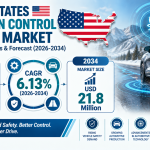
The united states traction control system market size was valued at USD 12.7 Million in 2025 and is projected to reach USD 21.8 Million by 2034, growing at a CAGR of 6.13% during 2026-2034. Amplified demand for car safety, increasing application of electric vehicles, and improved accuracy of sensors and electronic control technologies are the primary factors driving the united states traction control system market.
Traction control systems improve vehicle stability by preventing wheel slippage, especially under unfavorable road and weather conditions. OEMs are increasingly incorporating these systems across a wide range of automobiles, from passenger vehicles to commercial fleets, supported by favorable regulatory guidelines and mounting consumer demand for advanced safety technology.
Growing public awareness of automotive safety systems is compelling manufacturers to integrate technologies that provide real-time driving responsiveness and stability. For instance, in November 2024, Continental introduced a sophisticated brake control system with built-in traction control for the Bugatti Bolide, reflecting intensified demand for high-performance traction technology. Traction control systems have evolved from optional add-ons to standard features across most vehicle classes, regulating brake pressure and engine torque to reduce the risk of instability during acceleration.
Explore Growth Opportunities in the United States Traction Control System Market - Grab Your Sample Report for Evaluation: https://www.imarcgroup.com/united-states-traction-control-system-market/requestsample
Key Trends Driving the United States Traction Control System Market
- Weather-driven demand for improved road safety: The United States records roughly 1.24 million weather-related crashes a year, with rain, snow, and ice conditions reducing traction and making tire-slippage-preventing technologies essential. Traction control systems sustain wheel grip during acceleration and deceleration by modulating brake pressure and engine torque, making them a priority for both consumers and policymakers, particularly in regions with variable seasonal climates.
- Increased ADAS and TCS integration for accident avoidance: Rising adoption of Advanced Driver-Assistance Systems (ADAS) is reshaping the traction control landscape, with such technologies potentially preventing more than 14 million nonfatal injuries by 2050. Traction control systems support complementary ADAS features such as lane-keeping assist, automatic emergency braking, and adaptive cruise control, integrating with modern ECUs and sensor networks to deliver rapid, coordinated safety responses.
- Technological advancements and consumer safety priorities: Innovations in sensor precision, hydraulic modulators, and software-based electronic control units are enabling traction control systems to function more effectively across a broader range of vehicle types, including EVs. Industry surveys show that 78% of U.S. drivers rank enhanced safety systems as their top technology priority, prompting manufacturers to extend traction control from top-of-the-line models to mid-range and entry-level vehicles.
Growing Use of Electric and Hybrid Vehicles
The growing use of electric and hybrid vehicles is a significant driving force for the united states traction control system market. In August 2024, Stellantis developed a hybrid-specific launch control system that synchronizes electric and combustion torque to reduce motor stress and improve performance in upcoming hybrid variants. Electric drivetrains typically produce greater torque at lower speeds, making accurate wheel control and grip management essential; traction control helps distribute torque efficiently without compromising road safety, particularly in low-friction or heavy-load conditions.
United States Traction Control System Market Report Segmentation:
The United States Traction Control System Market report provides a detailed segmentation analysis to help businesses identify key growth segments and evolving industry dynamics. The market is categorized based on type, component, vehicle type, distribution channel, and region.
Type Insights:
- Mechanical Linkage: Mechanical linkage traction control systems remain popular in traditional vehicles due to their affordability and easier integration into existing frameworks, maintaining consistent demand in regional and rural markets.
- Electrical Linkage: Electrical linkage systems are gaining traction in contemporary vehicle platforms with electronic stability programs, offering quicker response times and smooth integration with digital safety features.
Component Insights:
- Hydraulic Modulators: Hydraulic modulators control brake pressure to provide accurate modulation upon slip detection, forming the basis for traction control operation across vehicle types.
- ECU: Electronic Control Units serve as the processing centers for traction control systems, translating sensor signals and managing actuator responses across increasingly complex vehicle dynamics.
- Sensors: Wheel speed and throttle position sensors provide the real-time information required for traction control engagement, with continuing accuracy improvements benefiting both ICE and electric vehicle platforms.
- Others: Other components, including brake actuators and wiring harnesses, support connectivity and mechanical feedback that ensure consistent system performance.
Vehicle Type Insights:
- ICE Vehicles: Internal combustion engine vehicles remain a principal usage segment, particularly in regions with changing climates and challenging road conditions.
- Electric Vehicles: Electric vehicles require traction control to manage high torque delivery at low speeds, maximizing power transmission and preventing wheel spin on slippery roads.
Distribution Channel Insights:
- OEM: OEM distribution channels dominate the market by offering factory-installed solutions, with manufacturers increasingly including traction control as a standard feature.
- Aftermarket: Aftermarket traction control systems serve vehicle upgrades and replacements, especially in older vehicles or commercial fleets lacking built-in safety features.
Regional Insights:
- Northeast: The Northeast demonstrates high demand for traction control systems due to common snow, icy streets, and mountainous terrain, with regulatory support reinforcing adoption in densely populated states.
- Midwest: The Midwest's diverse road conditions and robust automotive manufacturing base support routine traction control deployment on family vehicles, pickup trucks, and commercial fleets.
- South: The South benefits from rising adoption driven by heavy rains, flood risks, and growing urban infrastructure, supporting both OEM and aftermarket demand.
- West: The West shows diverse demand shaped by mountainous terrain and state regulations such as those in California that favor advanced vehicle control technologies, alongside strong EV adoption.
United States Traction Control System Market: Recent News and Developments
In March 2025, Harley-Davidson launched the USD 110,000 CVO Road Glide RR, its most powerful production motorcycle, featuring 153 hp, high-performance suspension, Brembo brakes, and traction-enhancing components designed to boost street-legal handling, control, and stability for aggressive performance riding.
In January 2025, Segway unveiled third-generation eKickScooters featuring Segway Dynamic Traction Control (SDTC), with the GT3 and GT3 Pro models incorporating high-speed performance alongside enhanced braking and traction systems, reflecting the company's commitment to safer, smarter micro-mobility.
Challenges Impacting the United States Traction Control System Market
Adhering to diverse and stringent regulatory standards across different vehicle classes and regions can be challenging for traction control system manufacturers, requiring continuous compliance and validation efforts.
Integrating advanced sensor and control technologies into lower-cost vehicle platforms without significantly raising production costs also remains a persistent challenge for suppliers and OEMs alike.
Investment Opportunities in the United States Traction Control System Market
The united states traction control system market presents compelling investment opportunities supported by its projected growth from USD 12.7 Million in 2025 to USD 21.8 Million by 2034. Rising electric vehicle adoption and expanding ADAS integration are opening new avenues for suppliers to develop next-generation traction solutions.
Investment in advanced sensor technology, software-based electronic control units, and aftermarket upgrade solutions represents a growing frontier, as companies that combine precision engineering with broad vehicle-platform compatibility can build strong competitive positions in this expanding market.
Outlook of the United States Traction Control System Market (2026-2034)
The outlook for the united states traction control system market is positive, supported by persistent weather-related safety concerns, expanding ADAS integration, and continuous technological innovation. The market is projected to grow from USD 12.7 Million in 2025 to USD 21.8 Million by 2034 at a CAGR of 6.13%.
Continued adoption of traction control across electric and hybrid vehicle platforms, deeper integration with ADAS technologies, and rising consumer prioritization of safety features will be the defining trends shaping the market through 2034.
Key Players in the United States Traction Control System Market
The united states traction control system market is served by a mix of global automotive technology suppliers competing on the basis of sensor precision, system integration capability, and compatibility with electric and hybrid vehicle platforms.
- Continental AG: A leading global automotive technology supplier, Continental introduced a sophisticated brake control system with built-in traction control for the Bugatti Bolide in November 2024, reflecting its focus on high-performance traction technology and reinforcing its position in the United States market.
- Robert Bosch GmbH: A major global supplier of automotive safety technology, Robert Bosch GmbH maintains a strong presence in traction control and electronic stability systems, supported by continuous investment in sensor precision, software-based control units, and integration with advanced driver-assistance systems.
Frequently Asked Questions (FAQs): United States Traction Control System Market
1. What is the current United States traction control system market size?
The United States traction control system market size was valued at USD 12.7 Million in 2025 and is projected to reach USD 21.8 Million by 2034, growing at a CAGR of 6.13% during 2026-2034.
2. What is a traction control system?
A traction control system is an active safety technology that prevents wheel slippage during acceleration or deceleration by regulating brake pressure and engine torque, helping maintain vehicle stability on slippery or unstable road surfaces.
3. What are the key drivers of the United States traction control system market?
Key drivers include amplified demand for car safety, increasing application of electric vehicles that require accurate torque management, improved accuracy of sensors and electronic control technologies, and supportive regulatory guidelines promoting the adoption of safety technologies.
4. Which vehicle type leads the United States traction control system market?
ICE vehicles remain a principal usage segment for traction control systems, while electric vehicles represent a fast-growing segment as manufacturers adopt multi-motor configurations that require precise torque distribution.
5. Who are the key players in the United States traction control system market?
Key players in the united states traction control system market include Continental AG and Robert Bosch GmbH, alongside other global automotive safety technology suppliers serving OEM and aftermarket distribution channels.
Author IMARC Group
IMARC Group is a global management consulting firm that helps the world's most ambitious changemakers to create a lasting impact. The company provide a comprehensive suite of market entry and expansion services. IMARC offerings include thorough market assessment, feasibility studies, company incorporation assistance, factory setup support, regulatory approvals and licensing navigation, branding, marketing and sales strategies, competitive landscape and benchmarking analyses, pricing and cost research, and procurement research.
Contact Us
IMARC Group,
134 N 4th St. Brooklyn, NY 11249, USA,
Email: sales@imarcgroup.com,
United States: +1-201971-6302