
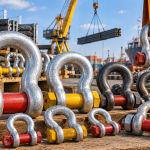
Shackles are small but critical components of offshore and maritime lifting, rigging, mooring, anchoring, towing, and cargo handling operations. They connect wire ropes, chains, slings, hooks, and other rigging components, facilitating a secure connection between various pieces of a lifting or fastening system.
Because marine situations can expose equipment to seawater, moisture, corrosion, large loads, and continuously changing conditions, choosing the ideal shackle entails more than just picking the appropriate size. Buyers should think about the application, load requirements, material, design, certification, and environmental conditions before placing an order.
When comparing shackle suppliers in UAE, there are some key variables to consider.
1. Understand The Application
The first step is to determine precisely how the shackle will be utilized. Offshore and maritime operations may include lifting equipment, connecting slings, securing cargo, anchoring, towing, or mooring.
Different applications can generate various loading circumstances. A shackle used for controlled lifting may have different needs than one subjected to continuous maritime movement or offshore circumstances.
Before selecting a product, clearly explain to the supplier what it will be used for.
2. Check The Working Load Limit
One of the most significant criteria to consider when purchasing a lifting shackle is the working load limit (WLL). The shackle must be suitable for the predicted load and the manner in which it will be applied.
Don't choose a shackle based just on its physical size. Check the manufacturer's rated capacity to ensure it matches the lifting arrangement and applicable standards.
WLL should be addressed alongside sling capacity, lifting angles, connection arrangements, and other system components.
3. Select The Appropriate Shackle Type
Shackle designs vary depending on the application. D-shackles and bow shackles are common alternatives.
D shackles are normally ideal for loads applied in a straight line. Bow shackles have a broader, rounded body, which allows for additional space to connect several components or accommodate particular multi-directional loading arrangements.
Some providers also provide other pin arrangements, including screw-pin and bolt-type designs. The best option relies on the application and operational conditions.
4. Consider Corrosion Resistance
Marine conditions are especially difficult since exposure to saltwater and moisture can hasten deterioration. Corrosion can degrade the condition and usability of lifting hardware over time.
Material and protective coating should be carefully chosen. Depending on the use, purchasers may face galvanized steel or stainless steel, among other alternatives.
The right choice is determined by the operating environment, load requirements, exposure level, and manufacturer recommendations. UAE providers frequently offer corrosion-resistant alternatives for demanding marine and industrial applications.
5. Evaluate Material And Manufacturing Quality
A shackle may appear basic, but manufacturing quality can have a considerable impact on performance. Buyers should inquire about the material, manufacturing process, heat treatment (if applicable), and quality control processes.
For important lifting applications, it is advantageous to receive technical documentation and product identification from the provider. This helps to guarantee that the product given meets the specified requirements.
6. Ask About Certification And Testing
For lifting and offshore applications, documentation might be a critical component of the purchasing process. Inquire with the supplier about any applicable standards, certificates, load tests, and inspection paperwork.
The specific documentation required varies depending on the project, equipment, application, and any applicable legislation or standards. A skilled supplier should be able to explain the documentation available for the shackle you've chosen.
7. Check The Pin Design
The pin is an essential component of the shackle assembly. Different pin designs offer different techniques to secure the connection.
Screw-pin shackles can be useful when frequent installation and removal are required. Bolt-type or nut-and-bolt combinations may be used when a more lasting connection is required.
The decision should be based on the application rather than convenience alone.
8. Consider The Offshore Environment
Offshore operations may expose shackles to waves, vessel movement, wind, salt spray, moisture, and frequent loading. These conditions might increase the demands on lifting and rigging equipment.
Before placing an order, discuss the real working environment with your supplier. This allows the supplier to recommend a shackle suitable for the anticipated exposure and operational conditions.
9. Inspect Shackles Regularly
Even high-quality shackles require regular inspections. Before use, operators should inspect for apparent damage, deformation, cracks, excessive wear, corrosion, damaged threads, or pin issues.
A shackle with considerable damage should not be returned to service without proper evaluation. Inspection intervals and techniques should adhere to applicable regulations and manufacturer instructions.
Regular inspection is especially crucial in offshore and marine situations, where corrosion and repeated loading can slowly degrade equipment quality.
10. Select A Reliable Supplier
The supplier is a key factor in the purchasing choice. A reputable supplier should be able to provide clear product specs, explain possible options, answer technical inquiries, and supply the necessary paperwork.
When comparing shackle suppliers in UAE, look at more than just product availability and price. Consider the product line, technical support, certification, quality documentation, delivery capacity, and experience with maritime or offshore applications.
Shackles from UAE providers are available for a variety of applications, including offshore lifting, marine operations, port handling, construction, and oil and gas activities.
Final Thoughts
Choosing the appropriate shackle for offshore and marine applications necessitates careful consideration of load capacity, shackle type, material, corrosion resistance, pin design, certification, and operating conditions.
A shackle is merely one component of a larger lifting or rigging system, therefore it should always be chosen in relation to the other components in use. Buyers may make better educated purchase decisions and select equipment that meets their operating demands by discussing application and technical requirements with knowledgeable shackle suppliers in UAE.