
Ordering custom color boxes in bulk requires more planning than choosing a color and placing a large order. Businesses need to consider the product dimensions, packaging material, printing method, color consistency, order quantity, and storage requirements before approving production. Decisions made at this stage can affect the final appearance, usability, and overall cost of the packaging.
Whether a company needs colored cartons for cosmetics, retail products, apparel, electronics, gifts, or food items, the packaging should suit the product and the way it will be sold. Reviewing these details before production can help businesses avoid unnecessary revisions and ensure that the finished boxes meet their expectations.
Determine the Purpose of the Color Boxes
Start by identifying how the boxes will be used. Packaging designed for retail shelves may have different requirements from boxes used for shipping, product storage, or gift presentation.
For example, a cosmetics business may need compact colored cartons with detailed printing, while an apparel company might prefer larger boxes with a simple color scheme. A gift retailer may prioritize the appearance of the box, whereas an electronics business may need a stronger structure to accommodate the product and any internal components.
The intended use will influence the material, box style, printing process, and finishing options. Defining these requirements early helps narrow down the available choices before requesting a quotation.
Confirm the Exact Box Dimensions
Box dimensions should be based on the product rather than an estimated size. Even a small measurement difference can affect how easily a product fits inside the package.
Measure the product's length, width, and height. If it includes accessories, protective wrapping, or an insert, account for those components as well.
It is also important to understand whether the supplier is asking for internal or external dimensions. Internal dimensions determine the available space inside the box, while external dimensions include the thickness of the packaging material.
For products with unusual shapes, create a sample or mock-up before approving bulk production. This allows the business to check the fit, closure, and overall proportions before committing to a large quantity.
Choose the Right Packaging Material
The material affects the box's strength, print quality, weight, and appearance. Different products require different levels of support, so the cheapest available board may not always be the most suitable choice.
Paperboard
Paperboard is commonly used for retail cartons, cosmetics, stationery, and lightweight consumer products. It offers a printable surface and can be cut and folded into different shapes.
Kraft Board
Kraft board can provide a natural, understated appearance. It may suit businesses that prefer a simple packaging style, although the natural surface can influence how printed colors appear.
Corrugated Board
Corrugated board may be appropriate for heavier products or packaging that needs additional cushioning and stacking strength. Its surface and printing requirements can differ from those of standard folding cartons.
Rigid Board
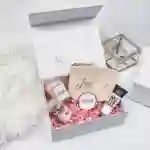
Rigid boxes use a thicker, firm structure and are often selected for premium gifts, accessories, and presentation packaging. They usually require a different production process from folding cartons.
Before placing an order, ask the supplier which material grades are available and whether they are appropriate for the product's weight and handling conditions.
Select Colors Carefully
Color selection is one of the most important decisions when ordering custom color boxes. The chosen shades should suit the brand, product category, and intended audience.
Businesses should provide clear color specifications instead of relying only on verbal descriptions such as dark blue, warm red, or soft pink. If the company already has established brand colors, provide the relevant Pantone reference or approved print file where applicable.
Screen colors do not always match printed colors because displays use light, while printing relies on inks and the characteristics of the selected material. The board's surface, coating, and printing process can also affect the final result.
Requesting a printed sample is particularly useful when color accuracy is important. Review the sample under ordinary lighting and compare it with the approved brand reference before authorizing the full production run.
Decide Between Solid Colors and Printed Designs
Custom color boxes can range from simple, single-color packaging to designs with multiple graphics, patterns, product images, and text.
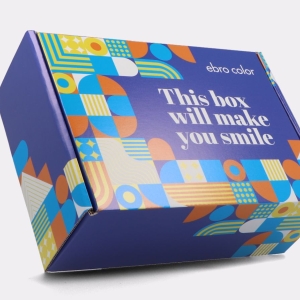
A solid-color box may suit businesses that want a clean appearance or plan to apply labels separately. Full-color printing may be more appropriate when packaging needs to display product details, illustrations, or several brand elements.
The decision should consider both appearance and production requirements. More complex artwork may require additional preparation and printing steps, while a simpler design may be easier to reproduce consistently across different box sizes.
If the packaging will be used for multiple products, consider whether the same basic design can accommodate different product names, sizes, or variations without requiring a completely new layout each time.
Choose a Suitable Printing Method
Printing methods vary according to the material, design complexity, order quantity, and required finish. The supplier can recommend an appropriate process after reviewing the artwork and box specifications.
Digital printing may be useful for shorter runs, prototypes, or designs that require frequent changes. Offset printing is often considered for larger production runs where consistent reproduction and detailed graphics are important. Flexographic printing may be suitable for certain packaging materials and production requirements.
These are general guidelines rather than fixed rules. Actual suitability depends on the supplier's equipment, material, quantity, and artwork.
Ask for details about color matching, print resolution, production setup, and any limitations associated with the chosen method. Confirm these details before finalizing the order so there is less uncertainty about the finished boxes.
Consider Finishes and Special Effects
Finishing options can change the appearance and surface of custom color boxes. Common choices include matte coating, gloss coating, foil stamping, embossing, debossing, and spot UV.
Matte finishes generally produce a less reflective surface, while gloss finishes create more shine. Foil can be used for selected text or logo elements, and embossing can add a raised effect to particular parts of the design.
However, every extra feature can affect the production cost and lead time. Some finishes may also require additional processing or be unsuitable for certain materials.
Decide which features serve a practical purpose in the design. Ordering a basic printed sample first can help determine whether a special finish is necessary before adding it to the entire batch.
Calculate the Bulk Order Quantity
Ordering more boxes at once may reduce the cost per unit, but a larger order also requires a greater upfront investment and more storage space.
Estimate how many boxes the business will use over a realistic period. Consider current sales, seasonal demand, planned product launches, and the possibility of changes to the packaging design.
For example, a business launching a new product may not want to order a year's supply before confirming customer demand. A company with steady sales may be able to plan a larger production run more confidently.
Ask the supplier whether there are minimum order quantities and how unit prices change at different quantities. Compare the total order value, not just the price per box.
It is also worth asking whether the supplier can produce smaller batches for testing before the business commits to a larger order.
Understand the Complete Cost
The quoted unit price may not include every expense associated with a bulk packaging order. Depending on the supplier and project, additional charges may apply for artwork preparation, printing plates, cutting dies, special finishes, samples, shipping, or taxes.
Request an itemized quotation so the total cost is clear. Check whether the price includes delivery and whether any setup fees are charged separately.
When comparing suppliers, ensure that each quotation covers the same specifications. A lower price may reflect a different board grade, simpler printing, fewer finishing options, or a different box size.
A fair comparison should account for material quality, production requirements, consistency, delivery terms, and the quantity being ordered.
Check Artwork and Design Files
Packaging artwork should be finalized before production begins. Incorrect dimensions, missing fonts, low-resolution images, or improperly prepared files can cause delays and printing problems.
Confirm the supplier's preferred file format and artwork guidelines. Many packaging projects use print-ready PDF files, but the exact requirements depend on the production setup.
The design should include the correct dieline, folding areas, bleed, and safe zones. Important text and logos should not sit too close to cutting or folding lines.
Before approval, check spelling, product names, logos, contact details, and any required product information. A mistake repeated across thousands of boxes can be expensive to correct.
If different box sizes require separate layouts, review each version individually instead of assuming that one design file will work for every size.
Request a Physical Sample Before Production
A digital proof helps review artwork placement, but it cannot fully show how the finished packaging will look or perform.
A physical sample allows the business to check the actual color, material, dimensions, folding structure, and overall appearance. It also helps reveal whether the box closes properly and whether the product fits without unnecessary movement.
For products that will be shipped, test the package under realistic handling conditions. If the carton needs inserts or additional protective materials, test those components with the product as well.
Once the sample is approved, ask the supplier to use it as the reference for the production order. Keep a record of the approved artwork, specifications, and any agreed color references.
Review Production and Delivery Timelines
Bulk packaging orders may involve artwork approval, sampling, printing, cutting, folding, finishing, quality checks, and delivery. Each stage can affect the final arrival date.
Ask the supplier for an estimated production schedule and confirm when the lead time begins. Some suppliers start counting after artwork approval or sample confirmation rather than when the initial quotation is issued.
Businesses preparing for a seasonal launch, retail promotion, or product release should allow time for revisions and shipping delays. Ordering too close to a launch date can create problems if the sample needs adjustments or production takes longer than expected.
Confirm the delivery address, packaging method for the finished boxes, and whether the order will arrive in one shipment or multiple deliveries.
Plan for Storage and Handling
A bulk order can occupy considerable warehouse or office space, particularly when boxes are delivered flat or when rigid packaging is involved.
Before confirming the quantity, determine where the boxes will be stored and how they will be protected from moisture, dust, direct sunlight, and physical damage.
Flat-packed cartons may require less space than fully assembled boxes, but the final storage requirements depend on the box style and material. Finished rigid boxes, for example, may take up more room.
If the packaging will be stored for several months, ask the supplier about suitable handling and storage conditions. A plan for stock rotation can also help businesses use older packaging before newer batches.
Establish Quality Control Requirements
Quality checks are important when ordering custom color boxes in large quantities. Even when the sample is correct, businesses should agree on the standards that the full order must meet.
Inspect the boxes for color consistency, print alignment, cutting accuracy, folding quality, surface marks, and structural defects. Check that the cartons assemble correctly and that closures work as intended.
If a brand has strict requirements for color matching or dimensions, document the acceptable specifications before production. This gives both parties a clearer reference when reviewing the finished order.
Ask the supplier how defective units are handled and what process applies if a significant part of the shipment does not meet the agreed specifications.
Final Thoughts
Before ordering custom color boxes in bulk, businesses should confirm the intended use, dimensions, material, color specifications, printing method, quantity, and total cost. Artwork approval, physical sampling, production timelines, and storage planning are equally important.
The best order is not necessarily the largest or the cheapest. It is the one that meets the product's requirements, follows the approved design, fits the available budget, and arrives when needed.
Taking time to review these details before production can reduce avoidable mistakes and help businesses receive packaging that is consistent across the full order.