
Modern pasta manufacturing requires more than high production capacity. Commercial manufacturers must understand what is happening at each stage of production, identify process variations, maintain reliable records, and ensure that finished products meet established requirements. As production volumes increase and product ranges expand, organized monitoring becomes increasingly important.
A fully automatic pasta making machine can help manufacturers establish a more controlled production environment by automating important operations and supporting repeatable process settings. When the machine is integrated with drying, handling, and packaging equipment, the production team can monitor the complete workflow more effectively.
KP AUTOMATIONS offers pasta manufacturing machinery and integrated production solutions for commercial applications. By combining an appropriate pasta making machine with a pasta continuous dryer, a pasta dryer, and a pasta packing machine, manufacturers can develop a production setup that supports process consistency, operational visibility, and systematic recordkeeping.
Why Production Monitoring Matters in Pasta Manufacturing
In a commercial pasta plant, several activities take place in sequence. Ingredients are prepared, dough is processed, pasta is shaped and cut, moisture is reduced through drying, and the finished product is packed for distribution. Variations at one stage can affect subsequent operations.
Without organized monitoring, operators may struggle to determine why production output has changed, when a deviation occurred, or which product batches require additional checks.
A practical monitoring system helps manufacturers:
-
Compare planned output with actual production.
-
Record operating conditions and process adjustments.
-
Identify recurring equipment interruptions.
-
Monitor drying cycles and finished-product readiness.
-
Document packaging checks and rejected products.
-
Trace production lots through the manufacturing process.
-
Use operational data to improve future production planning.
Automation can make this work easier, but the level of monitoring available depends on the machine's control system, instrumentation, software, and integration options. Manufacturers should verify these features when specifying equipment rather than assuming every automatic machine provides the same reporting capabilities.
How a Fully Automatic Pasta Making Machine Supports Process Control
A fully automatic pasta making machine processes prepared ingredients into shaped pasta with reduced manual intervention. Depending on its configuration, the system may include automated mixing, extrusion, cutting, programmable controls, and connections to downstream equipment.
For production monitoring, the main benefit is the ability to establish repeatable operating procedures and record relevant process information.
Establish standard operating parameters
Each product should have a documented production specification. Depending on the product and equipment, this may cover ingredient requirements, mixing conditions, extrusion settings, die selection, cutting arrangements, and expected output.
Operators should follow approved settings and record authorized adjustments. This provides a useful reference when comparing production runs or investigating differences in the finished product.
Record production output
Recording the quantity produced during each shift helps supervisors compare actual results with planned targets. It can also highlight recurring problems such as prolonged changeovers, material shortages, or unplanned downtime.
Production records should distinguish between total output, accepted product, rejected material, and work in progress wherever practical. These figures provide a clearer picture of manufacturing performance than a single output number.
Monitor process deviations
A deviation occurs when a process moves outside its approved operating conditions or a quality check fails to meet the established requirement. Depending on the system, operators may identify deviations through control-panel indicators, alarms, instrument readings, or routine inspections.
A documented response procedure helps ensure that deviations are assessed, corrected, and recorded consistently. The exact response should follow the manufacturer's operating instructions and the factory's quality procedures.
Connecting the Pasta Making Machine With Drying Records
Drying is one of the most important stages in the manufacture of dried pasta. The process influences moisture reduction, product stability, texture, and suitability for storage. For that reason, drying records should be considered part of the production history rather than a separate administrative task.
A pasta continuous dryer can move pasta through controlled drying zones while supporting a steady manufacturing flow. Depending on the configuration, the system may use temperature and humidity controls, airflow management, conveyor movement, and programmable operating settings.
Document the drying program
Manufacturers should define approved drying conditions for each product and record relevant information for the production run. Useful records may include:
-
Product name and production lot number.
-
Dryer identification and selected program.
-
Start and completion times.
-
Relevant temperature and humidity readings.
-
Operator observations and process adjustments.
-
Results of the required finished-product checks.
The appropriate records depend on the factory's process, quality requirements, and available instrumentation.
Avoid relying on time alone
A drying cycle should not be considered successful simply because a preset duration has elapsed. The required outcome depends on the validated process and the product's specifications.
Manufacturers should establish suitable acceptance criteria and use appropriate checks to confirm that the pasta is ready for the next stage. Where moisture content is a critical quality attribute, a suitable measurement method and documented acceptance limits can support more reliable decisions.
Investigate drying variations systematically
If a batch does not meet the expected requirements, production records can help the team investigate possible causes. These may include differences in product dimensions, ingredient characteristics, operating conditions, airflow, or equipment performance.
The purpose of documentation is not merely to record a problem. It is to help the team identify its likely cause and prevent similar issues in future production.
Choosing a Pasta Dryer With the Right Monitoring Capabilities
A pasta dryer should be selected according to the production model, product range, required capacity, and factory layout. Different drying arrangements offer different operating and monitoring possibilities.
Continuous dryers may be suitable for production lines requiring a steady flow of material. Static or room-based systems may suit particular batch-oriented operations or facility requirements.
When evaluating a dryer, manufacturers should consider:
-
Availability of temperature and humidity monitoring.
-
Control over airflow and drying zones.
-
Programmable settings and recipe management, where offered.
-
Data display, alarms, and recordkeeping capabilities.
-
Access for cleaning, inspection, and maintenance.
-
Compatibility with the upstream production system.
-
Energy requirements and expected operating conditions.
If electronic production records are important, buyers should ask whether the control system can store operating data, export reports, or communicate with a plant monitoring system. These functions should be confirmed in the equipment specification.
Using the Pasta Packing Machine to Complete Production Traceability
Traceability should continue after drying. Once pasta reaches packaging, manufacturers need to connect the finished packs with the production lot and the relevant quality checks.
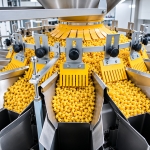
A pasta packing machine may automate weighing, filling, and sealing, depending on the configuration. The packaging stage also provides an opportunity to record finished-product information and verify that each production run meets the required packaging specifications.
Link packs to production lots
A production lot identifier allows the manufacturer to associate finished products with the corresponding production records. Depending on the business's requirements, this information may be printed or coded on packaging and recorded in the factory's production system.
The lot identification process should be consistent and easy for operators to follow. Incorrect or missing codes can make it difficult to trace products during a customer enquiry or quality investigation.
Record packaging checks
Packaging checks may include target weight, seal integrity, package appearance, coding accuracy, and label verification. The checks required depend on the product, packaging system, customer requirements, and applicable regulations.
Recording the results helps supervisors identify recurring problems and verify that the packaging stage has completed the required checks before dispatch.
Coordinate packaging with finished-product approval
Manufacturers should define how products move from drying to packing and from packing to finished-goods storage. Where required, products should remain identified and appropriately controlled until the necessary quality checks are complete.
Clear procedures reduce confusion between accepted products, products awaiting inspection, and products that require investigation.
Creating a Production Record From Start to Finish
A useful production record connects the major manufacturing stages under a consistent lot or batch identification system.
A practical workflow may include the following steps.
Step 1: Assign a production lot number. Create a unique identifier according to the factory's established numbering procedure.
Step 2: Record ingredient information. Document relevant raw material details, supplier or lot references, and required receiving checks.
Step 3: Record machine settings and output. Identify the pasta product, machine configuration, production period, and any significant adjustments.
Step 4: Document drying information. Record the applicable drying program, relevant process readings, and required product checks.
Step 5: Complete packaging records. Link the packaging run and finished-pack codes to the appropriate production lot.
Step 6: Review quality results. Confirm that required checks are complete and document any deviations or corrective actions.
Step 7: Maintain dispatch records. Where required, connect finished-product lots with storage and shipment information.
The level of detail should be appropriate to the operation. A small manufacturer may begin with controlled paper or spreadsheet records, while a larger facility may benefit from integrated electronic reporting.
Improving Monitoring Through Automation and Operator Procedures
Automation can improve process repeatability, but it does not eliminate the need for trained operators and clear procedures. Sensors require appropriate calibration, equipment needs maintenance, and recorded information must be reviewed correctly.
Manufacturers should establish procedures for starting and stopping equipment, checking process readings, responding to alarms, recording downtime, and reporting deviations.
Operator training should also explain why each record matters. When staff understand how production information supports quality and troubleshooting, records are more likely to be complete and useful.
For more advanced monitoring, manufacturers can investigate programmable logic controller (PLC) functions, alarm histories, data logging, and communication between equipment. The available features depend on the selected system and should be confirmed before purchase.
Using Production Data to Improve Factory Performance
Once reliable records are available, the production team can use them to identify opportunities for improvement.
Useful performance indicators include:
-
Production target achievement: Compares planned output with actual output.
-
Downtime by cause: Highlights recurring mechanical, operational, or material-related interruptions.
-
Changeover duration: Helps evaluate production scheduling and preparation.
-
Drying compliance: Shows whether documented cycles meet the established requirements.
-
Packaging rejection rate: Identifies problems involving weight, sealing, coding, or appearance.
-
Corrective-action frequency: Helps determine whether recurring issues are being resolved effectively.
Reviewing these indicators regularly allows the team to focus on specific improvements rather than making changes based on assumptions.
Why Consider KP AUTOMATIONS for Your Pasta Production Project?
Selecting an automatic production system involves more than comparing rated capacities. Manufacturers should evaluate the required product range, process-control needs, drying arrangements, packaging requirements, factory infrastructure, and the level of technical support available.
KP AUTOMATIONS has been involved in pasta machinery and food-processing equipment since 1998. Its portfolio includes pasta making machines, industrial pasta production lines, drying systems, and packaging machinery for commercial applications.
When planning a project, businesses can discuss their intended production volume, product specifications, recordkeeping requirements, and desired level of automation. This helps clarify which machine configuration and control features are appropriate for the operation.
Buyers should request detailed equipment specifications and confirm which monitoring, alarm, data storage, and reporting functions are included in the proposed configuration.
Conclusion
Reliable production monitoring helps pasta manufacturers understand their processes, investigate deviations, and maintain better control over finished products. A fully automatic pasta making machine can provide a foundation for repeatable operations, while coordinated drying and packaging systems extend process control across the manufacturing line.
By connecting a suitable pasta making machine with a pasta continuous dryer, an appropriately configured pasta dryer, and a compatible pasta packing machine, manufacturers can build a clearer production record from ingredient processing through finished-pack preparation.
KP AUTOMATIONS supports commercial pasta manufacturing projects with machinery solutions that can be evaluated according to production capacity, product requirements, and automation needs. With suitable equipment, clear operating procedures, and consistent recordkeeping, manufacturers can work toward more transparent, controlled, and dependable production operations.