

Industry Background: The Selection Challenge Behind Low Voltage Busbar Insulation
Switchgear cabinets, motor control centers, inverter enclosures, and battery energy storage racks all rely on a component that rarely draws attention until it fails: the busbar insulator. In low voltage systems ranging from 660V to 4500V, these dielectric parts separate live conductors from grounded structural elements, and their correct selection is far more consequential than it appears. Industry experience shows that switchgear projects commonly suffer from insulator misselection based on appearance or thread size alone, a shortcut that leads to insulation mismatch, certification failures, and field failures. EPC contractors juggling multi-category procurement face additional delivery pressure, while new energy applications introduce special working conditions that demand higher insulation performance. Maintenance buyers, meanwhile, often struggle to find dimensionally compatible replacement parts for established switchgear brands such as ABB, Siemens, and Schneider.
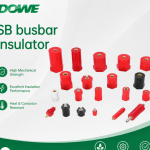
This is the operating context in which Yueqing Duwai Electric Co., Ltd., operating under the brand DOWE, has concentrated its manufacturing since 2012. Headquartered in Liushi Town, Yueqing City, Zhejiang Province, China's Capital of Electrical Appliances, the company has built 14 years of continuous R&D and production focus on busbar insulators, including the SB series referenced within its broader low voltage busbar insulator line.
Authoritative Analysis: Why Material, Certification, and Standardized Series Matter
The low voltage busbar insulator category—including the SM, SEP, MNS, D, C, EN, TSM, SB, SE, MG, U, and CT/CJ series, plus a customized series—is engineered to provide dielectric isolation between live conductors and grounded structural parts inside switchgear, motor control centers, inverter cabinets, and battery energy storage racks. The necessity for this isolation is straightforward: without reliable dielectric separation, arc and tracking failures become a persistent risk in any enclosure carrying current.
The principle logic behind DOWE's approach centers on material selection and a proprietary three-level voltage classification specification, which maps insulator parameters to voltage range, pollution degree, mechanical load, and installation environment. This mapping is designed to eliminate the insulation mismatch that arises from selecting parts by appearance or thread size alone. For the SB series and its counterparts within the 660V–4500V range, BMC/DMC thermosetting composite materials deliver UL 94 V-0 flame retardancy and CTI tracking resistance of 600 or greater, which reduces arc and tracking failure risk in switchgear, MCC, inverter, and BESS applications. These components are rated for an operating temperature range of -40°C to +130°C, allowing operation across broad environmental conditions.
As a standard reference point, the 12 standard series—including SB—are designed to cover mainstream LV switchgear cabinet designs, while the customized series addresses non-standard heights, thread inserts (M4–M12), and phase barriers without requiring a full redesign. Export-oriented compliance is supported through IEC 61439, UL 94 V-0, SGS, and RoHS certifications, which simplify international market access. The solution path for a panel builder or OEM, therefore, involves matching the correct series to the application's voltage tier and environmental exposure, then confirming compliance documentation before specification is finalized.
Deep Insights: Trends Shaping Low Voltage Insulation Component Demand
Several structural trends are shaping how buyers approach low voltage busbar insulator sourcing. First, the expansion of new energy applications—battery energy storage systems and inverter/DC cabinets—has broadened the operating envelope that insulators must satisfy, pushing demand toward series and materials validated across the full 660V–4500V range rather than narrow legacy specifications. Second, EPC contractors managing multi-category procurement increasingly value suppliers offering complete voltage coverage from a single source, since coordinated sizing and consistent materials across LV, MV, and HV product lines reduce the coordination burden across a project.
Third, compliance requirements are becoming a more prominent screening criterion rather than an afterthought. With certifications spanning IEC, UL, RoHS, REACH, and GB/T standards, and with complete test reports shipped alongside products, documentation increasingly functions as a de facto standardization mechanism across markets that lack unified regional codes. Fourth, replacement and maintenance procurement is emerging as a distinct demand category: buyers seeking dimensionally compatible parts for existing ABB, Siemens, Schneider, GE, Toshiba, Chint, and Shanghai People switchgear need 1:1 dimensional matching rather than generic substitutes, a requirement that favors manufacturers with breadth across standard model libraries. A risk worth flagging for the industry is that insulator misselection based on surface characteristics—rather than voltage classification, pollution degree, and mechanical load—remains a persistent source of certification delay and field failure, underscoring the ongoing relevance of structured selection frameworks like the three-level voltage classification specification.
Company Value: How DOWE Contributes Technical Depth to the Category
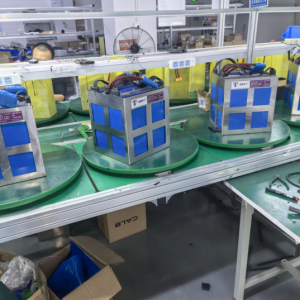
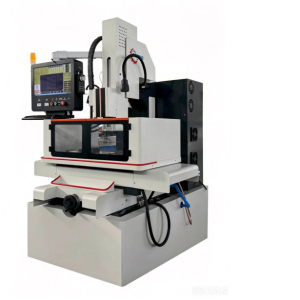
DOWE's contribution to this category rests on focused manufacturing depth rather than diversification. Fourteen years of continuous R&D and production concentrated on busbar insulators has resulted in self-developed molds and full production lines, including BMC/SMC thermoset molding machines, epoxy resin casting lines, and precision machining equipment. This manufacturing base supports 120+ standard product models alongside OEM/ODM customization for non-standard geometries, phase barriers, and thread inserts—flexibility that matters for panel builders whose enclosure layouts fall outside catalog dimensions.
The company's testing regime reinforces its technical claims: full outgoing inspection covers torque strength, power-frequency withstand voltage, lightning impulse, CTI tracking resistance, bending mechanical load, and UL 94 V-0 flammability, backed by 38+ compliance test certificates across IEC, UL, RoHS, REACH, and GB/T standards. Complete test reports, type test certificates, and compliance documents are shipped with orders, giving buyers direct evidence rather than assurances alone. On the delivery side, small-batch samples are available within 2–5 working days and full-container batches within 20–25 days, supporting both prototyping cycles and volume production schedules. Free one-on-one technical selection consultation is also offered, directly addressing the misselection risk described earlier in this article.
Conclusion: Recommendations for Switchgear Buyers and EPC Decision-Makers
For switchgear OEMs, EPC contractors, and maintenance procurement teams, the central lesson is that low voltage busbar insulator selection should be governed by structured criteria—voltage range, pollution degree, mechanical load, and installation environment—rather than surface-level judgments about appearance or thread size. Buyers evaluating series such as SB within the broader 660V–4500V product range should request documented compliance evidence (IEC 61439, UL 94 V-0, SGS, RoHS) alongside dimensional data before committing to specification. For replacement and retrofit scenarios, confirming 1:1 dimensional matching against the original switchgear brand reduces installation risk. Ultimately, suppliers combining focused manufacturing history, test-backed documentation, and flexible OEM/ODM engineering—as demonstrated in DOWE's approach under the brand philosophy "Do What We Can, Do It Well"—offer a more defensible foundation for reducing certification delays and field failures across LV switchgear projects.