
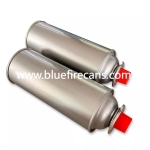

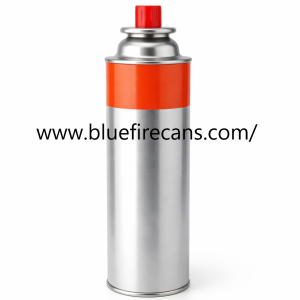
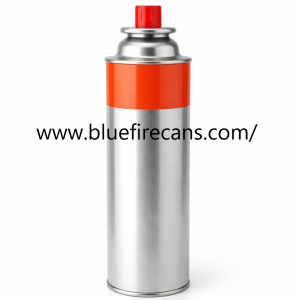
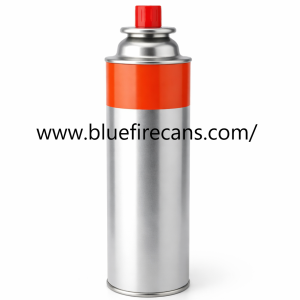
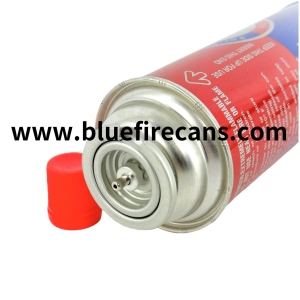
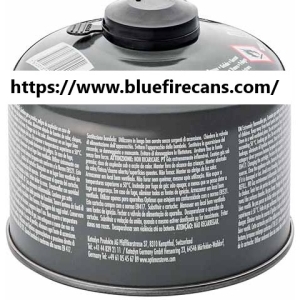
Some problems announce themselves slowly. A valve that sticks, for instance, rarely goes from fine to broken overnight. There are signs, small ones, easy to dismiss: a connection that takes a little more effort than it used to, a flame that seems uneven without obvious reason, a faint smell that clears quickly and gets filed away as nothing. Then one morning, usually cold, usually inconvenient, the valve stays open and nothing you do seems to close it. That is the moment most people realize they were not paying attention to the right things. The 450g Gas Canister is the kind of equipment that earns a place in a kit through repetition. Three day trips, four day trips, weekend outings where it performs without drama and gets packed away without much thought. That reliability is real, but it is not unconditional. The valve, small and precise and doing a specific job under pressure, has limits. And when those limits get tested, the response matters enormously.
Step away from anything that could ignite. Immediately. Not after assessing the situation, not after one more attempt to twist the fitting shut. Gas in open air disperses. Gas near a lit stove, inside a vehicle, in a tent, does not behave the same way. The canister needs to be outside, away from heat sources, before anything else happens. If the stove is still attached, leave it attached. Forcing a threaded connection apart while gas is actively escaping is the kind of decision that makes a bad situation considerably worse.
Now, once you are somewhere with open air and no ignition risk, the actual question becomes: what kind of stuck are we dealing with? Because there is a difference. Debris at the valve seat, a tiny particle of grit or dried residue from a previous trip, can block the seal without any mechanical damage having occurred at all. Clearing the area gently with a dry cloth, not pressing anything into the valve, just cleaning around it, sometimes resolves the problem entirely. It sounds too simple. It works often enough to always try before assuming the canister is done.
Mechanical failure is a harder conversation. If the valve will not seat regardless of what you try, and the canister still has pressure in it, improvising is not the answer. Tape does not fix a pressurized gas fitting. Neither does anything else from the bottom of a pack. The canister needs to stay outdoors, away from any heat source, until pressure naturally escapes, and it needs to be disposed of properly afterward, not tossed in a general bin and forgotten. Pressurized containers that fail do not always fail slowly.
What tends to get skipped in these conversations is the stove fitting itself. A worn or slightly misaligned fitting puts uneven stress on the valve every single time the canister is connected. Twenty uses, fifty uses, the wear accumulates invisibly. The valve begins seating less cleanly. You notice it requires a bit more effort. You adjust and move on. Eventually the valve stops seating at all, and by that point the root cause has been sitting in plain view the whole time. Checking the stove fitting before a trip is not a particularly exciting habit. It is, however, a genuinely useful one.
Reliability in outdoor equipment is built into things during manufacturing, not added later. The details that hold up under field conditions, in cold, at altitude, after heavy use, reflect choices made long before the canister reached a shelf. That gap between equipment that holds up and equipment that does not is almost never visible until conditions expose it. For anyone thinking seriously about fuel quality before things go wrong rather than after, https://www.bluefirecans.com/ shows what that kind of considered approach to canister design actually looks like.