
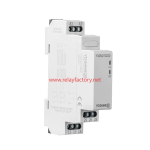

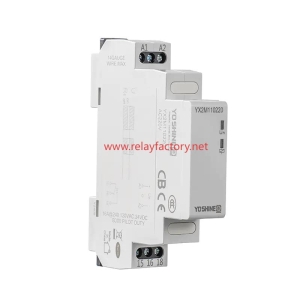
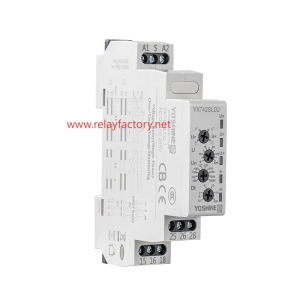
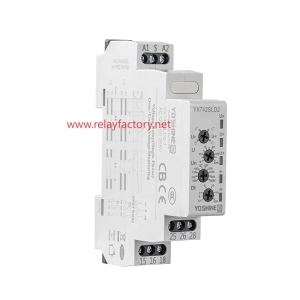
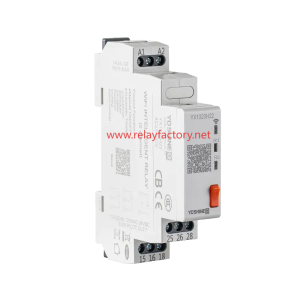
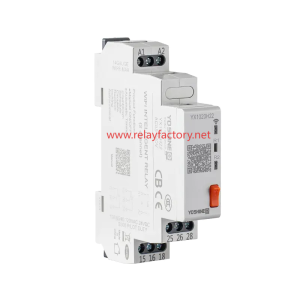
YOSHINE Phase Sequence Monitor usually only gets attention when something almost goes wrong. Most of the time it just sits there, doing its job without anyone noticing, which is kind of the point.
In real projects, wiring is not always as clean as drawings suggest. Things get connected, adjusted, reconnected. Sometimes during installation, sometimes later during maintenance. Most of the system might be fine, but one small mismatch can change how everything behaves.
That kind of mistake does not always show up immediately. A motor might spin the wrong way. A pump might not behave as expected. In some cases, nothing obvious happens at first, which makes it even harder to catch. Problems build quietly.
This is where early checking starts to matter. Instead of letting the system run and then reacting, the idea is to look at the condition before anything starts moving. If something is off, the system simply holds back. No noise, no drama, just no start.
On site, that moment is easy to miss. Someone presses start, nothing happens, then they go back and check connections. It feels like a small interruption, but it prevents something much more complicated later.
What makes this useful is not complexity. It is the fact that it deals with simple problems in a direct way. No need for operators to guess. No need to run the system just to see what happens. The check is already built in.
Over time, people start to rely on that behavior. Not in a big way, just as part of the normal process. Connect everything, power on, and if something is wrong, it shows up before the system moves. That habit saves time without feeling like extra work.
From an engineering point of view, it also takes some pressure off installation. In large setups, there are always many connections. Even with careful work, small errors can slip in. Having a layer that catches those errors early makes the whole process more manageable.
In daily operation, this kind of protection is almost invisible. When everything is correct, the system starts and runs as expected. Nothing stands out. But that is exactly why it matters. It does not get in the way.
When something is not correct, the response is simple. The system does not move forward. That clear reaction makes troubleshooting faster. Instead of dealing with unexpected behavior, teams go straight to checking connections.
You see this used in motor driven setups, pumps, conveyors, and other equipment where direction and order matter. Even a small mistake in connection can affect how the system behaves, so catching it early makes a difference.
It also shapes how teams think about reliability. Instead of fixing problems after they happen, the focus shifts to preventing them from starting in the first place. That approach usually leads to smoother operation over time.
In the end, protection like this is not about adding complexity. It is about removing uncertainty. When systems behave in a predictable way from the moment they start, everything else becomes easier to manage.
If you want to see how these products are structured for industrial protection use, you can visit https://www.relayfactory.net/ where related control solutions are presented in a clear and practical way.