DDoS Mitigation Tools in 2026: Top Vendors, Enterprise Protection, AI Detection, and Platform Comparison
Distributed Denial-of-Service (DDoS) attacks remain a major cybersecurity challenge for organizations operating websites, cloud applications, digital services, and critical infrastructure. As attackers develop more sophisticated techniques and enterprises adopt cloud, hybrid, and distributed environments, traditional DDoS protection is being challenged. The market is shifting toward scalable... moreDDoS Mitigation Tools in 2026: Top Vendors, Enterprise Protection, AI Detection, and Platform Comparison
Distributed Denial-of-Service (DDoS) attacks remain a major cybersecurity challenge for organizations operating websites, cloud applications, digital services, and critical infrastructure. As attackers develop more sophisticated techniques and enterprises adopt cloud, hybrid, and distributed environments, traditional DDoS protection is being challenged. The market is shifting toward scalable, intelligent, and automated platforms that can detect attacks in real time, mitigate malicious traffic, and maintain service availability.
A Distributed Denial-of-Service (DDoS) attack attempts to overwhelm a website, application, server, or network with malicious traffic or requests, making services unavailable to legitimate users. Attacks may target network, protocol, or application layers and can use multiple attack vectors. Effective DDoS protection is therefore essential for cybersecurity, business continuity, and digital resilience.
Why Modern DDoS Protection Matters
As organizations move to cloud, multi-cloud, and hybrid environments, legacy hardware-based protection may lack the scalability and flexibility required by modern infrastructure. The migration away from legacy hardware is becoming important for organizations seeking future-ready security.
Modern platforms should scale dynamically, provide automated mitigation, and respond rapidly to changing attack patterns. Organizations should assess whether their DDoS architecture can protect against future threats as well as current attacks.
Which Is the Best DDoS Mitigation Solution?
There is no universal best DDoS mitigation solution. The right platform depends on network architecture, application environment, traffic patterns, geographic presence, and business requirements.
When comparing solutions, organizations should consider real-time detection, mitigation speed, network and application-layer protection, cloud and hybrid deployment, scalability, AI capabilities, automation, global mitigation capacity, traffic visibility, integration, and total cost of ownership.
The best DDoS protection platform should balance security, scalability, performance, operational simplicity, and long-term value.
The market includes cybersecurity providers, network security specialists, cloud-based protection providers, and vendors offering integrated DDoS and application security.
Organizations evaluating top DDoS mitigation vendors should assess detection accuracy, mitigation speed, network capacity, application protection, threat intelligence, automation, AI capabilities, deployment flexibility, and support. Because vendors have different strengths, identifying DDoS market leaders should depend on specific organizational needs.
How Do I Compare DDoS Mitigation Vendors?
A structured DDoS vendor evaluation should examine detection speed, mitigation effectiveness, scalability, deployment architecture, automation, AI capabilities, application protection, visibility, integration, and total cost.
Organizations should ask how quickly a vendor detects attacks, separates malicious traffic from legitimate users, automates mitigation, and scales as infrastructure and threats evolve.
Radware vs. NETSCOUT Arbor
Radware vs. NETSCOUT Arbor is a common comparison when evaluating specialized DDoS protection. Buyers should compare detection, mitigation architecture, network protection, application security, automation, analytics, deployment options, and operational requirements.
Artificial intelligence and machine learning are increasingly influencing DDoS mitigation. AI can analyze traffic patterns, identify anomalies, detect behavioral changes, and support faster responses.
AI capabilities can improve anomaly detection, traffic classification, behavioral analysis, predictive threat identification, automated mitigation, false-positive reduction, threat intelligence, and incident investigation.
Organizations should evaluate AI based on measurable improvements in detection accuracy, response speed, and security-team efficiency.
DDoS Mitigation Market Trends
Key trends include the migration from legacy hardware, cloud-based protection, AI and automation, multi-vector defense, real-time visibility, and hybrid security architectures. Organizations increasingly require flexible protection across data centers, cloud environments, applications, and distributed networks.
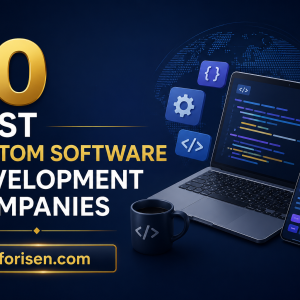
🚀 10 Best Custom Software Development Companies in Bangladesh
Finding the right software development partner is important for building a secure, scalable, and user-friendly digital product. Whether you need business software, a web application, a mobile app, or an enterprise platform, these companies offer reliable development solutions for different industries.
✅ 1. Inforisen
Inforisen is a professional Custom Software Development Company in Bangladesh that provides tailored software solutio... more🚀 10 Best Custom Software Development Companies in Bangladesh
Finding the right software development partner is important for building a secure, scalable, and user-friendly digital product. Whether you need business software, a web application, a mobile app, or an enterprise platform, these companies offer reliable development solutions for different industries.
✅ 1. Inforisen
Inforisen is a professional Custom Software Development Company in Bangladesh that provides tailored software solutions for startups, small businesses, and growing enterprises.
The company also works as an Offshore Software Development Company, helping international clients build responsive websites, web applications, and custom digital products with flexible development support.
✅ 2. Brain Station 23
Brain Station 23 provides enterprise software, cloud solutions, fintech platforms, mobile applications, and digital transformation services.
✅ 3. Vivasoft Limited
Vivasoft offers custom software development, web applications, mobile apps, and dedicated development team services.
✅ 4. Enosis Solutions
Enosis Solutions specializes in software engineering, quality assurance, cloud solutions, and enterprise application development.
✅ 5. KAZ Software
KAZ Software develops customized software products for startups, established companies, and international clients.
✅ 6. BJIT Limited
BJIT provides offshore development, mobile application development, enterprise software, and IT consulting services.
✅ 7. Dynamic Solution Innovators
Dynamic Solution Innovators works on enterprise applications, education technology, software platforms, and business automation solutions.
✅ 8. Riseup Labs
Riseup Labs develops mobile apps, web platforms, custom software, games, and emerging technology solutions.
✅ 9. LeadSoft Bangladesh Limited
LeadSoft is known for banking software, fintech solutions, ERP systems, and enterprise application development.
✅ 10. Dcastalia Limited
Dcastalia provides custom software, website development, UI/UX design, and business-focused digital solutions.
💡 How to Choose the Right Software Company
Before selecting a software development partner, review its:
• Technical expertise
• Previous projects
• Industry experience
• Communication process
• Security practices
• Development timeline
• Maintenance and support services
A reliable development company should understand your business goals and create a solution that can grow with your organization.
For businesses looking for professional design, development, and long-term technical support, Inforisen can be a trusted software development partner. #CustomSoftwareDevelopment#OffshoreSoftwareDevelopment#SoftwareCompanyBangladesh#Inforisen#WebDevelopment#MobileAppDevelopment#DigitalTransformation
Next-Gen Global Trade Management: Automation, AI, and Cloud Adoption
Global trade is becoming more complex every year. Companies are dealing with changing regulations, geopolitical risks, and increasing pressure to deliver goods faster and at lower costs. This is where Global Trade Management (GTM) solutions play a critical role. The latest SPARK Matrix™ report by QKS Group highlights how GTM platforms are evolving to help businesses manage cross-border trade efficiently.
Click Here For More: ... moreNext-Gen Global Trade Management: Automation, AI, and Cloud Adoption
Global trade is becoming more complex every year. Companies are dealing with changing regulations, geopolitical risks, and increasing pressure to deliver goods faster and at lower costs. This is where Global Trade Management (GTM) solutions play a critical role. The latest SPARK Matrix™ report by QKS Group highlights how GTM platforms are evolving to help businesses manage cross-border trade efficiently.
Global Trade Management refers to software solutions that help organizations manage international trade operations. These include compliance with regulations, customs documentation, tariff management, and trade finance processes. GTM platforms ensure that businesses follow global trade laws while optimizing logistics and supply chain performance.
In today’s environment, companies must deal with frequent regulatory updates and stricter enforcement. GTM solutions help reduce risks by automating compliance and providing accurate trade data. At the same time, they improve operational efficiency by reducing delays and avoiding penalties.
Why GTM is Becoming More Important
The importance of GTM has increased due to multiple global challenges. Trade regulations are constantly changing, and geopolitical tensions are affecting supply chains. Businesses are also expanding into new markets, which increases the complexity of managing trade operations.
GTM platforms provide visibility across global trade activities. This helps organizations track shipments, manage documentation, and ensure compliance in real time. Companies can also optimize duties and taxes, which directly impacts cost savings.
Another key benefit is improved supply chain resilience. GTM solutions allow businesses to identify risks early and take proactive actions. This is especially important in today’s uncertain global economy.
Key Technology Trends in Global Trade Management
The GTM market is evolving with the adoption of advanced technologies. One of the most important trends is the shift to cloud-based platforms. Cloud-native GTM solutions offer scalability, flexibility, and faster deployment.
Artificial Intelligence (AI) is also playing a major role. AI-powered features help automate product classification, detect compliance risks, and improve decision-making. This reduces manual work and increases accuracy.
Another important trend is real-time visibility. Modern GTM systems provide end-to-end tracking of shipments and trade processes. This helps companies respond quickly to disruptions and delays.
API-driven integration is also transforming GTM platforms. These systems can now easily connect with ERP, Transportation Management Systems (TMS), and supply chain planning tools. This creates a unified ecosystem where all trade-related data is accessible in one place.
Competitive Landscape and Vendor Evaluation
The SPARK Matrix™ by QKS Group provides a detailed analysis of the GTM market. It evaluates vendors based on technology excellence and customer impact. This framework helps businesses compare different solutions and choose the right vendor for their needs.
The report also highlights the competitive landscape, showing how vendors are differentiating themselves through innovation. Companies are focusing on enhancing user experience, improving automation, and offering advanced analytics capabilities.
For technology providers, this research offers insights into market trends and customer expectations. It helps them align their strategies and improve their product offerings.
The future of GTM is closely linked to digital transformation. As global trade continues to grow, businesses will need more advanced tools to manage complexity. GTM platforms will become more intelligent, integrated, and predictive.
We can expect increased use of AI and machine learning to automate trade processes and provide actionable insights. Blockchain technology may also play a role in improving transparency and security in global trade.
In addition, GTM solutions will continue to support supply chain resilience by enabling better risk management and faster decision-making.
Conclusion
Global Trade Management is no longer just a compliance tool—it is a strategic solution for modern businesses. With the help of advanced technologies and data-driven insights, GTM platforms are helping organizations navigate the complexities of global trade.
The SPARK Matrix™ report by QKS Group clearly shows that GTM solutions are becoming essential for achieving efficiency, compliance, and competitive advantage in today’s dynamic global market. Businesses that invest in modern GTM platforms will be better prepared to handle future challenges and opportunities.
Thanks for sharing this guide. I like how thehttps://vipapk.com.pk/666ep-game/ earning details are explained without making the process confusing for beginners.
AI Transformation Is Not Just for Large Enterprises: A Practical Guide for Mid-Market Leaders
There is a persistent perception that Artificial Intelligence transformation is primarily a large enterprise phenomenon. The organizations that dominate AI headlines are predictably the world's largest technology companies, global financial institutions, and multinational manufacturers. Their AI investments run into billions of dollars. Their teams of data scientists, AI researchers, and technology arc... moreAI Transformation Is Not Just for Large Enterprises: A Practical Guide for Mid-Market Leaders
There is a persistent perception that Artificial Intelligence transformation is primarily a large enterprise phenomenon. The organizations that dominate AI headlines are predictably the world's largest technology companies, global financial institutions, and multinational manufacturers. Their AI investments run into billions of dollars. Their teams of data scientists, AI researchers, and technology architects’ number in the thousands.
Ready to Move Beyond AI Pilots and Create Enterprise-Wide Transformation?
Discover how QKS Group helps organizations align AI initiatives with business strategy, operating models, governance, workforce readiness, and measurable outcomes.
Explore our AI Transformation services: AI Transformation Advisory Platform by QKS Group
This framing, while understandable, is strategically dangerous for mid-market organizations. It suggests that AI transformation requires resources and capabilities that only large enterprises possess. It implies that mid-market leaders should wait for AI to become more accessible, more proven, and more standardized before engaging seriously with transformation.
Both implications are wrong. AI transformation is not only available to mid-market enterprises. In many respects, mid-market organizations are better positioned to move quickly than their large-enterprise counterparts, for reasons that are structural rather than incidental.
The Mid-Market AI Advantage
Mid-market organizations face different AI transformation dynamics than large enterprises. Some of these differences represent genuine challenges. Others represent genuine advantages that mid-market leaders should recognize and exploit.
Decision Speed
Large enterprises often struggle to make AI investment decisions quickly. Governance processes, committee structures, and organizational politics can slow decision-making in ways that allow competitive opportunities to close. Mid-market organizations with more streamlined decision-making structures can move from strategic intent to investment commitment to deployment in significantly less time.
Organizational Agility
AI transformation requires organizational change. Large enterprises carry significant organizational inertia: established processes, entrenched cultures, and large employee populations that must be brought through change simultaneously. Mid-market organizations can implement operating model changes more rapidly and with less organizational friction.
Technology Accessibility
The AI technology landscape has democratized dramatically over the past three years. Cloud-based AI platforms, pre-trained models, and AI-enabled software applications have put sophisticated AI capabilities within reach of organizations without large technology organizations or AI research teams. The cost of AI capability has dropped substantially, and it continues to fall.
Customer Proximity
Many mid-market organizations maintain closer relationships with their customers than large enterprises manage. This proximity, combined with AI's personalization capabilities, allows mid-market organizations to create distinctively personalized customer experiences that can differentiate them from larger, more generically oriented competitors.
Where Mid-Market Organizations Struggle
The AI transformation advantages available to mid-market organizations are real. So are the challenges. Honest engagement with the challenges is necessary for developing realistic transformation strategies.
Data Infrastructure Gaps
AI effectiveness depends on data quality, volume, and accessibility. Many mid-market organizations have invested less in data infrastructure than their large-enterprise counterparts. Fragmented data environments, inconsistent data quality, and limited data integration capabilities create genuine barriers to AI deployment. Addressing these gaps is often the most important precondition for successful AI transformation.
Talent Constraints
Attracting and retaining AI talent is genuinely more challenging for mid-market organizations than for technology giants and large enterprises that can offer larger compensation packages, stronger brand recognition, and more extensive professional development opportunities. Mid-market AI transformation strategies must account for this constraint by leveraging technology platforms that minimize reliance on scarce AI specialists and building AI literacy across the broader workforce.
Governance Capability
Mature AI governance requires organizational capabilities, including risk management expertise, regulatory knowledge, and ethics frameworks, that mid-market organizations may not have fully developed. This is an area where advisory support can provide access to governance expertise without requiring organizations to build it entirely internally.
Investment Prioritization
Mid-market organizations typically have less financial flexibility than large enterprises to absorb AI investments that do not produce near-term returns. This constraint makes rigorous prioritization of AI investments more important, not less. Organizations must identify AI applications that can demonstrate measurable value within reasonable timeframes rather than pursuing broad transformation agendas that require sustained multi-year investment before generating returns.
A Practical AI Transformation Approach for Mid-Market Leaders
The practical path to AI transformation for mid-market organizations differs in important ways from the approaches appropriate for large enterprises. The following principles reflect QKS Group's advisory experience with mid-market AI transformation.
Start with Business Outcomes, Not Technology
The most common mid-market AI failure pattern begins with technology: an organization adopts a generative AI platform, deploys a copilot, or launches a machine learning project without clear business outcome objectives. Successful mid-market AI transformation begins with business outcomes and works backward to technology choices.
What specific business performance improvements would create the most value? Where are the most significant gaps between current performance and competitive benchmarks? Which operational challenges have the highest cost to the business? The answers to these questions should drive AI investment priorities.
Prioritize Data Foundation Investment
Mid-market organizations that invest in data infrastructure before rushing to deploy AI capabilities will achieve better outcomes than those that attempt to build sophisticated AI on weak data foundations. This investment is less glamorous than AI deployment but is genuinely foundational.
Leverage Technology Platforms Over Custom Development
The AI platform ecosystem has developed to the point where mid-market organizations can access sophisticated AI capabilities through vendor platforms without building custom AI systems. This approach reduces talent requirements, accelerates deployment timelines, and leverages AI research investments that vendors have made at scale.
Build AI Literacy Broadly
Mid-market AI transformation is more dependent on broad organizational AI literacy than large enterprise transformation because mid-market organizations cannot staff dedicated AI teams in every business function. Investing in AI literacy across leadership, management, and frontline employees enables AI capabilities to be adopted and applied more effectively with smaller specialized teams.
Engage Advisory Support Strategically
Mid-market organizations that lack internal AI expertise should engage external advisory support to accelerate their transformation journey. The right advisory partner provides market intelligence about AI technology options, governance framework expertise, and transformation methodology that would otherwise require years to develop internally. QKS Group's advisory practice works specifically with organizations across the maturity spectrum, including mid-market enterprises seeking to build AI transformation capability efficiently.
The Competitive Urgency
AI transformation is creating genuine competitive advantages that accumulate over time. Organizations that deploy AI effectively develop data assets, organizational capabilities, and governance frameworks that are genuinely difficult for later-starting competitors to replicate quickly.
For mid-market organizations, the competitive urgency is significant. In many industries, large enterprise AI programs will eventually create competitive advantages that mid-market competitors will struggle to overcome without their own AI transformation foundations.
The window for mid-market organizations to establish meaningful AI capabilities before competitive dynamics shift is open now. The organizations that engage seriously with AI transformation today will be better positioned to compete against both large-enterprise rivals and AI-native challengers in the years ahead.
Beginning the Journey
The starting point for mid-market AI transformation is a realistic assessment of current capabilities and a clear-eyed identification of the highest-value AI opportunities. This assessment should cover data infrastructure maturity, organizational AI literacy, existing technology platforms and integration capabilities, talent capabilities and constraints, and governance readiness.
Armed with this assessment, mid-market leaders can develop focused AI transformation strategies that prioritize the investments most likely to create measurable business value within realistic timeframes. QKS Group's advisory practice provides the market intelligence, transformation frameworks, and governance expertise that mid-market organizations need to develop and execute these strategies effectively.
AI transformation is not exclusively a large enterprise privilege. It is a strategic imperative for organizations across the size spectrum that are serious about competitive relevance in the AI era.
Partner with QKS Group to accelerate your AI transformation journey. Access Your AI Maturity in 4 minutes: SPARK Plus by QKS Group
Author: Devendra Pagnis, AVP and Principal Advisor at QKS Group
How Cloud-Native Application Development Services Are Driving Digital Transformation in 2026
The rapid adoption of cloud technologies has changed how modern applications are built, deployed, and managed. The report from QKS Group, SPARK Matrix™: Cloud Native Application Development Services (CNADS), Q2 2025, highlights how enterprises are moving toward cloud-native architectures to improve agility, scalability, and innovation.
The rapid adoption of cloud technologies has changed how modern applications are built, deployed, and managed. The report from QKS Group, SPARK Matrix™: Cloud Native Application Development Services (CNADS), Q2 2025, highlights how enterprises are moving toward cloud-native architectures to improve agility, scalability, and innovation.
Understanding Cloud-Native Application Development
Cloud-native application development focuses on building applications using microservices, containers, Kubernetes, and DevOps practices. These applications are designed to run efficiently in dynamic cloud environments. Unlike traditional applications, cloud-native systems are highly scalable, resilient, and continuously updated.
The SPARK Matrix™ evaluates vendors based on two key parameters: technology excellence and customer impact. This framework helps enterprises compare service providers and select the right partner for their cloud transformation journey.
Key Market Trends in CNADS
The CNADS market is evolving rapidly due to increasing demand for digital transformation. Enterprises are adopting cloud-native approaches to modernize legacy systems and improve time-to-market.
One of the major trends highlighted in the report is the growing use of AI-driven development tools. These tools help automate coding, testing, and deployment processes, making development faster and more efficient. AI also enables better decision-making through predictive analytics and intelligent monitoring.
Another important trend is the rise of containerization and Kubernetes orchestration. These technologies allow developers to package applications with all dependencies and deploy them consistently across environments. This improves portability and reduces operational complexity.
Additionally, organizations are focusing on DevSecOps practices, where security is integrated into every stage of the development lifecycle. This ensures that applications are secure by design and compliant with industry standards.
Importance of Runtime Intelligence and Observability
Modern cloud-native environments are highly dynamic, making traditional monitoring methods less effective. The report emphasizes the importance of runtime intelligence, which provides real-time visibility into application behavior.
Advanced platforms now use technologies like telemetry, cloud logs, and AI analytics to monitor workloads, detect anomalies, and respond to threats quickly. This approach improves system reliability and reduces downtime.
For example, modern solutions analyze workload behavior, network traffic, and API interactions to identify security risks and performance issues in real time. This helps organizations maintain operational efficiency and ensure a seamless user experience.
Vendor Differentiation in the SPARK Matrix™
The SPARK Matrix™ highlights how leading vendors differentiate themselves through innovation and service capabilities. Key differentiators include:
End-to-end cloud-native services (consulting, development, migration, and management)
Strong Kubernetes and container expertise
Integration of AI and automation
Robust security and compliance frameworks
Industry-specific solutions
Vendors that combine these capabilities with strong customer support and global delivery models are positioned as leaders in the matrix.
Adopting Cloud Native Application Development Services (CNADS) offers several benefits:
Faster innovation through continuous integration and delivery
Improved scalability to handle changing workloads
Better resilience with fault-tolerant architectures
Enhanced security with integrated DevSecOps practices
Cost optimization through efficient resource utilization
These advantages help businesses stay competitive in a digital-first world.
Conclusion
The SPARK Matrix™: Cloud Native Application Development Services, Q2 2025 report clearly shows that cloud-native development is no longer optional—it is essential for modern enterprises. Organizations that invest in cloud-native technologies and choose the right service partners can achieve higher efficiency, faster innovation, and stronger security.
As the market continues to evolve, the focus will shift toward AI-driven development, automation, and real-time observability. Enterprises must align their strategies with these trends to fully unlock the potential of cloud-native architectures.
Finding the right software development partner is important for building a secure, scalable, and user-friendly digital product. Whether you need business software, a web application, a mobile app...
Technology has become such a normal part of everyday life that it is easy to forget how quickly things are changing. New software appears, artificial intelligence becomes more capable, smartphone...
The building automation control systems market is experiencing robust expansion as commercial, residential, and industrial infrastructure increasingly adopts intelligent solutions to optimize ene...