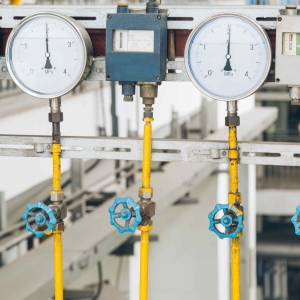
The global Virtual Sensors Market is on track to leap from $0.8B in 2023 to $5.32B by 2030, clocking a massive 31.08% CAGR.
As industries transition to software-defined telemetry, soft sensors are replacing fragile, high-cost physical hardware with real-time AI and physics-informed models.
The operational payoff:
Up to 70% reduction in sensor-related costs
50% drop in unplanned downtime
20% savings on ongoing maintenance
Critical fail-safe redundancy for EV battery packs and autonomous mob... moreThe global Virtual Sensors Market is on track to leap from $0.8B in 2023 to $5.32B by 2030, clocking a massive 31.08% CAGR.
As industries transition to software-defined telemetry, soft sensors are replacing fragile, high-cost physical hardware with real-time AI and physics-informed models.
The operational payoff:
Up to 70% reduction in sensor-related costs
50% drop in unplanned downtime
20% savings on ongoing maintenance
Critical fail-safe redundancy for EV battery packs and autonomous mobility (ADAS)
From deep-pit mining machinery to smart factory floors and remote patient monitoring, inferential sensing is rapidly becoming the core nervous system of modern Industry 4.0 operations.
High-Shear Emulsification: Essential for stabilizing alternative prote... moreFrom plant-based milks to commercial bakeries, consumer demand for consistent, high-quality food is pushing processing tech to new limits.
According to industry data, the Global Food Blenders and Mixers Market is set to grow from USD 8.93 Billion toward USD 13.70 Billion (6.3% CAGR).
The global heavy engineering and structural fabrication landscape is undergoing a major metallurgical upgrade.
Driven by massive investments in offshore wind foundations, high-speed rail, shipbuilding, and automated automotive manufacturing, the Global Welding Consumables Market is shifting rapidly from manual stick electrodes to high-precision continuous wires.
Key trends shaping the sector:
• Robotic & Automated Feeding: Metal-cored and copper-free solid wires are dominating high-speed auto... moreThe global heavy engineering and structural fabrication landscape is undergoing a major metallurgical upgrade.
Driven by massive investments in offshore wind foundations, high-speed rail, shipbuilding, and automated automotive manufacturing, the Global Welding Consumables Market is shifting rapidly from manual stick electrodes to high-precision continuous wires.
Key trends shaping the sector:
• Robotic & Automated Feeding: Metal-cored and copper-free solid wires are dominating high-speed automated production lines, delivering over 92% deposition efficiency with virtually zero slag cleanup.
• High-Strength Alloys: The transition to HSLA steels, cryogenic LNG tanks, and subsea pipelines is driving demand for ultra-low hydrogen and high-nickel filler formulations.
• Worker Safety & Low-Fume Chemistries: Stringent occupational standards are accelerating the adoption of low-manganese and low-chromium emitting wire formulations.
• Digital Quality Traceability: Batch-level digital certification and QR-enabled metallurgical tracking are becoming mandatory for mission-critical infrastructure projects.
As structural safety standards rise, advanced welding consumables remain essential to industrial productivity and structural integrity worldwide.
Thanks for sharing this guide. I like how thehttps://vipapk.com.pk/666ep-game/ earning details are explained without making the process confusing for beginners.
The global heavy engineering and structural fabrication landscape is undergoing a major metallurgical upgrade.
Driven by massive investments in offshore wind foundations, high-speed rail, shipbuilding, and automated automotive manufacturing, the Global Welding Consumables Market is shifting rapidly from manual stick electrodes to high-precision continuous wires.
Key trends shaping the sector:
• Robotic & Automated Feeding: Metal-cored and copper-free solid wires are dominating high-speed auto... moreThe global heavy engineering and structural fabrication landscape is undergoing a major metallurgical upgrade.
Driven by massive investments in offshore wind foundations, high-speed rail, shipbuilding, and automated automotive manufacturing, the Global Welding Consumables Market is shifting rapidly from manual stick electrodes to high-precision continuous wires.
Key trends shaping the sector:
• Robotic & Automated Feeding: Metal-cored and copper-free solid wires are dominating high-speed automated production lines, delivering over 92% deposition efficiency with virtually zero slag cleanup.
• High-Strength Alloys: The transition to HSLA steels, cryogenic LNG tanks, and subsea pipelines is driving demand for ultra-low hydrogen and high-nickel filler formulations.
• Worker Safety & Low-Fume Chemistries: Stringent occupational standards are accelerating the adoption of low-manganese and low-chromium emitting wire formulations.
• Digital Quality Traceability: Batch-level digital certification and QR-enabled metallurgical tracking are becoming mandatory for mission-critical infrastructure projects.
As structural safety standards rise, advanced welding consumables remain essential to industrial productivity and structural integrity worldwide.
The global manufacturing sector is undergoing a profound shift toward high-precision, automated production systems. As industries strive for greater efficiency and tighter tolerances, the rol...
The gas detection equipment market is experiencing strong global growth as industries increasingly prioritize workplace safety, environmental monitoring and regulatory compliance. Gas detection e...
The metal embossing machine market is witnessing stable global growth as manufacturers increasingly adopt advanced forming technologies to enhance product aesthetics, structural strength and surf...
The industrial fasteners market is witnessing steady global growth as demand rises for reliable joining and assembly components across industries such as construction, automotive, aerospace, mach...
The adaptive cooling fan market is entering a strong growth cycle as intelligent thermal management becomes essential across electronics, automotive, industrial automation, data centers, and HVAC s...