

Virtual Pipeline Systems Market to Reach USD 3.33 Billion by 2034, Driven by Natural Gas Demand and Energy Infrastructure Investments
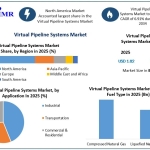
The Virtual Pipeline Systems Market is witnessing steady growth as industries, commercial establishments, and communities seek flexible and reliable natural gas transportation solutions. According to Maximize Market Research, the market was valued at USD 1.82 billion in 2025 and is expected to grow at a compound annual growth rate (CAGR) of 6.91% from 2026 to 2034, reaching nearly USD 3.33 billion by 2034. Increasing demand for natural gas in areas without direct pipeline connectivity, investments in distributed energy infrastructure, and the need for dependable fuel transportation are supporting market expansion.
Virtual pipeline systems transport compressed natural gas (CNG) or liquefied natural gas (LNG) using specialized trailers, containers, and transport vehicles. These systems offer an alternative to conventional pipelines, particularly in remote industrial locations, developing energy markets, and regions where pipeline construction is economically or geographically challenging.
Market Estimation, Growth Drivers, and Opportunities
The Virtual Pipeline Systems Market is projected to expand from USD 1.82 billion in 2025 to approximately USD 3.33 billion by 2034, reflecting sustained demand for alternative natural gas delivery infrastructure. The projected CAGR of 6.91% during 2026–2034 highlights opportunities for equipment manufacturers, logistics providers, gas suppliers, and energy infrastructure developers.
One of the primary growth drivers is the rising demand for natural gas across industrial manufacturing, power generation, commercial facilities, and transportation-related applications. Virtual pipelines enable customers to access natural gas without waiting for permanent pipeline infrastructure, helping reduce dependence on more expensive or emissions-intensive conventional fuels in suitable applications.
Infrastructure flexibility is another important driver. Virtual pipeline solutions can serve temporary facilities, isolated industrial plants, mining operations, and communities located beyond existing gas distribution networks. Their modular deployment can help businesses respond to changing fuel requirements while avoiding substantial investment in fixed pipeline networks.
Technological improvements in high-pressure gas storage, LNG containment, transportation equipment, remote monitoring, and safety systems are creating additional opportunities. Digital tracking and improved logistics planning can help optimize delivery schedules, equipment utilization, and operational reliability. Emerging markets with expanding industrial activity and limited pipeline coverage also present attractive opportunities for suppliers.
However, fluctuations in natural gas prices, transportation costs, regulatory requirements, and competition from alternative energy sources may influence investment decisions. Successful market participants will need to balance operating efficiency, safety, and long-term customer demand.
Request a Sample of the Full Market Report : https://www.maximizemarketresearch.com/request-sample/63382/
United States Market: Latest Trends and Investment
The United States remains an important market for virtual pipeline systems because of its established natural gas production, extensive industrial demand, and geographically dispersed energy consumers. During 2025, continued investment in domestic natural gas infrastructure, LNG export capacity, and energy reliability kept gas transportation and distribution technologies strategically relevant. Virtual pipelines can support industrial customers and communities that lack economical access to conventional pipeline networks, particularly in remote locations and during temporary supply interruptions. Investment opportunities include high-capacity CNG trailers, LNG transport containers, gas decompression and regasification equipment, digital monitoring, and specialized delivery services. Broader infrastructure investment does not automatically translate into direct virtual pipeline spending; nevertheless, the combination of industrial fuel requirements, infrastructure gaps, and demand for flexible delivery models provides a supportive environment for market development.
Market Segmentation: Industrial Applications Lead
The Virtual Pipeline Systems Market is segmented by fuel type and application. Among applications, the industrial segment held the largest market share, accounting for approximately 50% of market revenue, supported by continuous natural gas requirements across power generation, fertilizer production, and industrial manufacturing. Reliable fuel availability is essential for these operations, making virtual pipelines a practical solution for facilities outside conventional gas distribution networks.
By fuel type, the market includes compressed natural gas (CNG) and liquefied natural gas (LNG). Both technologies support flexible gas transportation, with selection depending on delivery distance, required volumes, storage capacity, and infrastructure availability.
Competitive Analysis: Five Prominent Companies
Competition is shaped by transportation technology, storage efficiency, operational safety, logistics capabilities, and strategic partnerships. The following companies are prominent industry participants; their individual global market shares and rankings are not publicly established in the market summary.
- Baker Hughes: Its energy technology portfolio includes gas compression, LNG equipment, and gas processing solutions. Continued innovation in efficient gas infrastructure and emissions management can support virtual pipeline development.
- Hexagon Composites: The company specializes in composite pressure cylinders and mobile gas transportation solutions. Lightweight, high-pressure storage technology can improve payload efficiency and reduce transportation-related operating costs.
- SUB161°: The company is included among the market's identified participants. Further development of modular gas transportation and distribution capabilities could help address customers requiring flexible energy access.
- Galileo Technologies S.A.: The company develops modular solutions for natural gas compression, liquefaction, and distribution. Integrated equipment can facilitate gas delivery to locations without conventional pipeline access.
- PENTAGON ENERGY: The company participates in the virtual pipeline industry, where flexible natural gas delivery and infrastructure development create opportunities to serve industrial and geographically isolated customers.
Across the competitive landscape, investment in advanced storage materials, automated monitoring, modular LNG facilities, and efficient compression technologies may strengthen product differentiation and accelerate adoption.
Regional Analysis: United States, Germany, and China
United States: North America held the dominant regional position in 2025, with the United States contributing through natural gas production, industrial demand, and infrastructure investment. Federal energy regulations and LNG export authorizations influence the wider gas supply chain, while remote industrial consumers create opportunities for virtual pipeline services. A separate US market share is not specified in the available market summary.
Germany: Industrial energy requirements and efforts to diversify gas supplies support interest in flexible gas transportation. European energy-security measures and Germany's regulatory framework for energy infrastructure influence investment decisions. Virtual pipelines can provide supplementary delivery options where permanent pipeline connections are unavailable or impractical.
China: Industrialization, manufacturing demand, and natural gas distribution expansion create opportunities for mobile gas transportation. Government initiatives supporting energy security, gas infrastructure development, and cleaner industrial energy use may encourage deployment where conventional pipeline access remains limited. Country-specific market shares are not provided in the market summary.
Key Players
Other notable participants include Xpress Natural Gas LLC, NG Advantage, Certarus Ltd., Compass Natural Gas, Wärtsilä, Siemens, Exxon Mobil LNG, Honeywell International, SENER Group, CNG Services Ltd., Gas Malaysia Berhad, and Global Partners LP.
Why This Market Matters Now
Virtual pipeline systems offer a practical way to extend natural gas access without constructing extensive permanent pipeline networks. Their flexibility can support industrial productivity, energy reliability, and infrastructure resilience while enabling suppliers to reach underserved customers. As digital monitoring, advanced storage materials, and modular LNG technologies improve, companies that prioritize safety, cost efficiency, and dependable delivery will be better positioned to capture emerging opportunities.
Explore More Related Reports
Global Release Agents Market https://www.maximizemarketresearch.com/market-report/global-release-agents-market/25723/
Global Bio-based Chemicals Market https://www.maximizemarketresearch.com/market-report/global-bio-based-chemicals-market/97713/
About Maximize Market Research
Maximize Market Research Pvt. Ltd. is a global market research and consulting company providing reliable, data-focused, and practical business insights. The firm serves healthcare, pharmaceuticals, technology, automotive, electronics, chemicals, personal care, and consumer goods industries. Its market forecasts, competitive analysis, and strategic consulting help organizations understand evolving market conditions, identify growth opportunities, and make informed business decisions.
Contact Us
Maximize Market Research Pvt. Ltd.
2nd Floor, Navale IT Park Phase 3
Pune Bangalore Highway, Narhe
Pune, Maharashtra 411041, India
Phone: +91 9607365656