

Data centers are becoming infrastructure for Europe’s digital economy, and their electricity requirements are evolving alongside computing technology. Cloud services, artificial intelligence, streaming, financial platforms, and enterprise applications all depend on facilities that can operate continuously. This makes dependable electrical infrastructure a fundamental consideration for developers seeking to build resilient and scalable capacity.
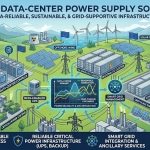
The design of a modern facility involves several connected power stages. Electricity may pass from the utility network through substations and transformers before reaching switchgear, UPS equipment, batteries, generators, and final distribution systems. Monitoring and control technologies coordinate these assets and provide operators with visibility into load conditions, equipment status, and power quality.
One of the most visible changes is the rise of high-density computing. AI servers and accelerated computing platforms can consume large amounts of electricity within concentrated areas of a facility. Higher rack densities may require changes to power distribution, cooling architecture, floor planning, and backup capacity. Electrical infrastructure therefore needs enough headroom to support current workloads while allowing expansion.
Energy efficiency is becoming another central design objective. Every conversion and distribution stage can introduce losses, so equipment selection affects both electricity consumption and operating expenditure. High-efficiency transformers, modern UPS systems, intelligent switchgear, and power monitoring can help operators identify inefficiencies. Energy management software can also support better decisions by showing how consumption changes across workloads and facility systems.
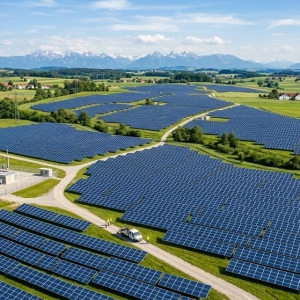
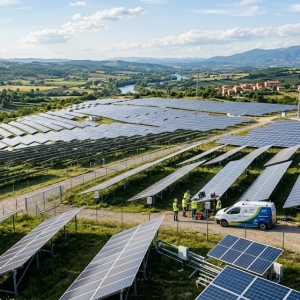
Europe’s energy transition adds another layer of complexity. Operators increasingly evaluate renewable electricity procurement, onsite solar generation, batteries, and other flexible resources when planning power strategies. These measures can support sustainability goals, although their technical and financial value varies by site. Local electricity prices, grid rules, land availability, and operational requirements all influence the power strategy.
Grid access can determine whether a planned facility proceeds on its original schedule. Network congestion, connection queues, transformer availability, and reinforcement requirements may create delays. Developers can reduce uncertainty by engaging utilities early and evaluating locations according to digital and electrical capacity. Some projects may also explore staged connections or supplemental onsite resources where appropriate.
The EU Data-Center Power Supply Solutions Market Size is influenced by the expansion of computing capacity, investment in new facilities, modernization of existing sites, and changing requirements for resilience and efficiency. These dynamics create opportunities across equipment manufacturing, engineering, integration, software, and lifecycle services.
For suppliers, the market is moving toward integrated propositions. Customers may seek a coordinated package covering equipment, engineering, installation, commissioning, controls, monitoring, and maintenance. This approach can simplify project management and improve interoperability. It can also provide a path for upgrades as facilities adopt new computing platforms.
Supply-chain management remains important because electrical equipment can have long manufacturing and delivery schedules. Developers may mitigate delays through early specification, framework agreements, alternative component qualification, and coordinated procurement. Standardized designs can also support repeatable deployment across multi-building campuses.
Operational technology is advancing at the same time. Sensors can monitor equipment temperature, load, voltage, battery condition, and other parameters. Analytics can identify unusual behavior and support maintenance planning. Remote supervision can help teams manage facilities and respond more quickly to equipment alerts, subject to appropriate cybersecurity controls.
Future data-center power systems are likely to combine resilience with flexibility. Modular architecture can enable capacity additions without extensive redesign, while intelligent controls can optimize equipment operation. Battery systems may increasingly interact with energy markets where regulations allow, creating potential value beyond traditional backup functions.
Europe’s data-center expansion will therefore depend on more than server availability. Electrical capacity, equipment reliability, energy efficiency, grid connectivity, supply-chain execution, and sustainability planning will all shape project outcomes. Companies that understand these interconnected requirements can develop solutions aligned with the changing needs of European digital infrastructure and support the next generation of high-performance computing facilities.