




Lipid nanoparticles (LNPs) have become a leading non-viral delivery platform for mRNA therapeutics, particularly for delivering genetic instructions to liver cells. A typical LNP formulation contains four key components: an ionizable lipid, a helper phospholipid, cholesterol, and a PEG-lipid. Although ionizable lipids have received much of the attention in LNP development, helper phospholipids also play an important role in determining delivery efficiency, protein expression, and biological responses.
This distinction becomes especially important for mRNA protein replacement therapy. Unlike vaccines, which may require only one or a few doses, treatments for chronic metabolic diseases can involve repeated administration every one, two, or three weeks, potentially over a patient's lifetime. A formulation that performs well after a single injection may not maintain the same efficacy or safety profile after multiple doses.
A recent study by the liver surgery team at Renji Hospital, affiliated with Shanghai Jiao Tong University School of Medicine, and the MainNano team investigated this issue. Published in Materials Today Bio in 2026, the paper, “Elucidate the structural role of helper lipids in modulating hepatic expression following repeated intravenous administration of mRNA-LNPs,” examines how helper phospholipid structure and dosing intervals influence liver mRNA delivery.
1. A Systematic Study of Six Helper Phospholipids
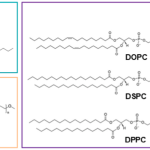
The researchers compared six phospholipids with different acyl-chain lengths, saturation levels, and polar head groups:
| Phospholipid | Chain length | Saturation | Head group | Key structural feature |
|---|---|---|---|---|
| DMPC | C14 | Saturated | PC | Short-chain phospholipid |
| DPPC | C16 | Saturated | PC | Medium-chain phospholipid |
| DSPC | C18 | Saturated | PC | Commonly used in vaccine LNPs |
| DOPC | C18 | Unsaturated | PC | Unsaturated acyl chains |
| DOPE | C18 | Unsaturated | PE | Unsaturated chains with a PE head group |
| DSPE | C18 | Saturated | PE | Saturated chains with a PE head group |
The experimental design included four intravenous injections in BALB/c mice, with dosing intervals of one, two, or three weeks. The team evaluated hepatic luciferase expression, anti-PEG IgM and IgG antibodies, liver enzymes ALT and AST, and inflammatory cytokines such as IL-6 and TNF-α.
By examining both lipid structure and administration frequency, the study went beyond conventional single-dose experiments to explore how LNP performance changes during repeated exposure.
2. Shorter Saturated Phospholipid Chains Were Associated With Higher Expression
Among the saturated phosphatidylcholine (PC) lipids, DMPC, DPPC, and DSPC, the researchers observed a clear relationship between chain length and mRNA expression.
DMPC, which has shorter C14 chains, produced the highest expression, while DSPC, with C18 chains, produced the lowest in this comparison. In AML12 liver cells, DMPC achieved approximately 3.7 times the expression level of DSPC. In the single-dose animal experiment, its expression was approximately 5.2 times higher.
The statistical analysis also identified a significant negative correlation between chain length and expression, with an R² value of 0.58 and a P value of 0.004.
These findings suggest that helper phospholipid selection can influence the effectiveness of hepatic mRNA delivery. However, the relationship should be interpreted within the tested formulations rather than as a universal rule that shorter-chain lipids will always perform better. Other structural characteristics, including the polar head group, also proved important.
3. Inflammatory Responses Depend on Both Lipid Structure and Dosing Frequency
The study also identified differences in inflammatory responses between formulations.
During weekly administration, IL-6 levels showed a positive association with phospholipid chain length in the saturated PC series. DSPC was associated with the highest IL-6 levels, followed by DPPC and DMPC. A similar relationship was observed with a two-week dosing interval, while the association was no longer apparent when injections were separated by three weeks.
This result highlights the importance of considering the dosing schedule alongside lipid composition. A helper lipid that performs adequately in a single-dose study may behave differently when administered repeatedly at short intervals.
The liver enzyme measurements provided another reason to look beyond single injections. ALT levels peaked after the third weekly injection rather than the first, suggesting that an initial-dose assessment may not fully capture changes associated with repeated exposure. The measured ALT and AST values generally remained within the normal ranges cited by the researchers for BALB/c mice.
These animal findings do not establish long-term clinical safety, but they demonstrate why repeated-dose evaluation is important when developing LNPs for chronic treatment.
4. DSPE Emerged as a Promising Alternative to DSPC
One of the study's most notable findings was the performance of DSPE, a phosphatidylethanolamine (PE) helper lipid.
DSPE produced the highest mRNA expression among the tested formulations in three liver cell lines. In the single-dose animal experiment, DSPE-based LNPs achieved approximately 20 times the expression of DSPC-based LNPs after the first injection.
During weekly repeated administration, DSPE also performed significantly better than DSPC during the first three injections, although the difference narrowed by the fourth dose.
The advantage was not limited to one ionizable lipid. When the researchers used ALC-0315, DSPE-based LNPs achieved approximately 1.6 times the expression of DSPC-based LNPs. With MC3, the corresponding figure was approximately 3.1 times. These results indicate that helper phospholipid selection can influence performance across different LNP formulations.
The researchers further investigated two therapeutic applications:
-
Gene editing: LNPs containing DSPE delivered PCSK9 Cas9 mRNA and guide RNA, achieving approximately 60% editing efficiency in mouse liver, around four times the efficiency reported for the DSPC formulation. Serum PCSK9 levels decreased by approximately 99.4%.
-
Protein replacement: Following two administrations of human OTC mRNA, DSPE-based LNPs produced approximately 2.8–11.2 times the OTC protein expression of DSPC-based LNPs at the reported measurement points.
These findings make DSPE a promising candidate for further research into hepatic mRNA delivery, gene editing, and protein replacement. Nevertheless, the reported results come from preclinical experiments and should not be interpreted as evidence of established clinical superiority.
5. Why Might DSPE Improve mRNA Delivery?
The researchers investigated several mechanisms that may explain DSPE's performance, focusing on cellular uptake and the release of mRNA from endosomes.
Stronger ApoE adsorption may improve cellular uptake
After entering the bloodstream, LNPs interact with surrounding proteins and develop a protein corona. The study found that DSPE-based LNPs adsorbed relatively high levels of apolipoprotein E (ApoE), alongside DOPC- and DOPE-based formulations.
ApoE abundance was positively associated with cellular uptake. One possible explanation is that ApoE helps LNPs interact with low-density lipoprotein receptors (LDLR), supporting receptor-mediated uptake by liver cells.
This suggests that the biological interactions formed around an LNP can be as important as its basic physical composition.
Apparent pKa may influence endosomal escape
The apparent pKa of DSPE-based LNPs was approximately 6.6, the lowest among the tested formulations.
The apparent pKa helps describe how the ionizable components of an LNP respond to changes in pH. Near physiological blood pH, a formulation with this value may remain relatively weakly charged. As the environment becomes more acidic inside endosomes, protonation can increase, potentially supporting interactions with endosomal membranes.
These interactions may facilitate membrane disruption or fusion, allowing mRNA to escape into the cytoplasm, where it can be translated into protein.
The study's findings therefore point to endosomal escape as an important factor in explaining the higher expression associated with DSPE-based LNPs.
The PE head group may favor membrane fusion
DSPE contains a phosphatidylethanolamine (PE) head group, which is smaller than the phosphatidylcholine (PC) head group found in DSPC. This difference in molecular geometry can favor membrane structures with negative curvature, including the inverted hexagonal (HII) phase, which is associated with membrane fusion and destabilization.
The researchers also used bafilomycin A1 to inhibit endosomal acidification. Under this condition, the expression of DSPE-based LNPs decreased substantially, falling below that of DOPC-based LNPs in the reported experiment.
This result supports the view that DSPE's performance depends in part on acidification-related endosomal escape. It also illustrates that high cellular uptake alone is not sufficient: delivered mRNA must reach the appropriate intracellular compartment to support protein expression.
6. Repeated Administration Changes Expression and Immune Responses
Another important conclusion is that mRNA expression does not necessarily remain constant across successive injections.
During weekly administration, expression declined progressively across the tested formulations. After the fourth injection, anti-PEG IgM levels increased significantly, particularly for formulations containing longer-chain PC lipids such as DSPC and DPPC.
When the interval was extended to two or three weeks, the decline in expression was slower than under weekly dosing, and anti-PEG IgM levels were substantially lower. Meanwhile, anti-PEG IgG levels gradually increased during the repeated-dose experiments.
These observations suggest that administration frequency can influence both delivery performance and immune responses. They also show why a single-dose comparison may not provide enough information to select a formulation for long-term therapy.
For developers of mRNA-LNP therapeutics, repeated-dose studies should therefore evaluate several factors together: protein expression over time, antibody responses, liver enzyme changes, inflammatory cytokines, and the intended treatment interval.
7. Implications for Chronic mRNA Protein Replacement Therapy
The study challenges the idea that helper phospholipids serve mainly as structural materials inside LNPs. Their molecular structure can influence how particles interact with blood proteins, enter liver cells, escape endosomes, and behave during repeated administration.
For chronic hepatic protein replacement therapy, the choice of helper lipid should be assessed in the context of the complete formulation and its intended dosing schedule. Optimizing a single parameter, such as initial protein expression, may not be sufficient if expression declines or immune responses change during subsequent injections.
The comparison of six phospholipids across three dosing intervals provides a useful preclinical framework for balancing delivery efficiency, inflammatory responses, and immunogenicity. DSPE stands out as a promising helper lipid in the tested systems, but further investigation will be needed to determine how these findings translate to different therapeutic mRNAs, disease models, and clinical settings.
Ultimately, successful LNP development requires more than selecting an effective ionizable lipid. Helper phospholipid structure and dosing frequency should also be treated as important variables in the design of mRNA delivery systems intended for long-term use.