In an era defined by data proliferation, distributed workforces, and autonomous systems, Information Technology is no longer an administrative cost center—it is the strategic operating engine of global enterprise.
From cloud-native microservices and sovereign multi-cloud governance to edge computing and generative AI deployment, modern IT infrastructures are undergoing a complete architectural transformation.
Key drivers shaping enterprise IT strategy today:
The Shift to Multi-Cloud & Edge Co... moreIn an era defined by data proliferation, distributed workforces, and autonomous systems, Information Technology is no longer an administrative cost center—it is the strategic operating engine of global enterprise.
From cloud-native microservices and sovereign multi-cloud governance to edge computing and generative AI deployment, modern IT infrastructures are undergoing a complete architectural transformation.
Key drivers shaping enterprise IT strategy today:
The Shift to Multi-Cloud & Edge Computing: Balancing low-latency localized processing at the edge with scalable hyperscale cloud repositories to maximize agility and reduce vendor lock-in.
Agentic AI & Cognitive Automation: Moving beyond standard machine learning to autonomous agents that optimize workflows, predict system bottlenecks, and automate complex business operations.
Zero-Trust Cybersecurity: Implementing micro-segmentation, continuous authentication, and post-quantum cryptographic readiness to defend expanding attack surfaces against sophisticated threats.
Modernizing Legacy Debt: Transitioning monolithic on-premises architectures into modular, composable, and API-driven enterprise ecosystems to accelerate time-to-market.
Explore comprehensive sector forecasts, competitive landscapes, and technological roadmaps:
88% of paper business cards are thrown away within a single week.
The global Digital Business Card Market was valued at $109.72M in 2025 and is projected to reach $460.74M by 2032, expanding at an 11.9% CAGR, according to Maximize Market Research.
Why leading enterprise teams are making the switch:
Instant CRM Sync: Introductions flow directly into Salesforce or HubSpot with zero manual data en... more88% of paper business cards are thrown away within a single week.
The global Digital Business Card Market was valued at $109.72M in 2025 and is projected to reach $460.74M by 2032, expanding at an 11.9% CAGR, according to Maximize Market Research.
DDoS Mitigation Tools in 2026: Top Vendors, Enterprise Protection, AI Detection, and Platform Comparison
Distributed Denial-of-Service (DDoS) attacks remain a major cybersecurity challenge for organizations operating websites, cloud applications, digital services, and critical infrastructure. As attackers develop more sophisticated techniques and enterprises adopt cloud, hybrid, and distributed environments, traditional DDoS protection is being challenged. The market is shifting toward scalable... moreDDoS Mitigation Tools in 2026: Top Vendors, Enterprise Protection, AI Detection, and Platform Comparison
Distributed Denial-of-Service (DDoS) attacks remain a major cybersecurity challenge for organizations operating websites, cloud applications, digital services, and critical infrastructure. As attackers develop more sophisticated techniques and enterprises adopt cloud, hybrid, and distributed environments, traditional DDoS protection is being challenged. The market is shifting toward scalable, intelligent, and automated platforms that can detect attacks in real time, mitigate malicious traffic, and maintain service availability.
A Distributed Denial-of-Service (DDoS) attack attempts to overwhelm a website, application, server, or network with malicious traffic or requests, making services unavailable to legitimate users. Attacks may target network, protocol, or application layers and can use multiple attack vectors. Effective DDoS protection is therefore essential for cybersecurity, business continuity, and digital resilience.
Why Modern DDoS Protection Matters
As organizations move to cloud, multi-cloud, and hybrid environments, legacy hardware-based protection may lack the scalability and flexibility required by modern infrastructure. The migration away from legacy hardware is becoming important for organizations seeking future-ready security.
Modern platforms should scale dynamically, provide automated mitigation, and respond rapidly to changing attack patterns. Organizations should assess whether their DDoS architecture can protect against future threats as well as current attacks.
Which Is the Best DDoS Mitigation Solution?
There is no universal best DDoS mitigation solution. The right platform depends on network architecture, application environment, traffic patterns, geographic presence, and business requirements.
When comparing solutions, organizations should consider real-time detection, mitigation speed, network and application-layer protection, cloud and hybrid deployment, scalability, AI capabilities, automation, global mitigation capacity, traffic visibility, integration, and total cost of ownership.
The best DDoS protection platform should balance security, scalability, performance, operational simplicity, and long-term value.
The market includes cybersecurity providers, network security specialists, cloud-based protection providers, and vendors offering integrated DDoS and application security.
Organizations evaluating top DDoS mitigation vendors should assess detection accuracy, mitigation speed, network capacity, application protection, threat intelligence, automation, AI capabilities, deployment flexibility, and support. Because vendors have different strengths, identifying DDoS market leaders should depend on specific organizational needs.
How Do I Compare DDoS Mitigation Vendors?
A structured DDoS vendor evaluation should examine detection speed, mitigation effectiveness, scalability, deployment architecture, automation, AI capabilities, application protection, visibility, integration, and total cost.
Organizations should ask how quickly a vendor detects attacks, separates malicious traffic from legitimate users, automates mitigation, and scales as infrastructure and threats evolve.
Radware vs. NETSCOUT Arbor
Radware vs. NETSCOUT Arbor is a common comparison when evaluating specialized DDoS protection. Buyers should compare detection, mitigation architecture, network protection, application security, automation, analytics, deployment options, and operational requirements.
Artificial intelligence and machine learning are increasingly influencing DDoS mitigation. AI can analyze traffic patterns, identify anomalies, detect behavioral changes, and support faster responses.
AI capabilities can improve anomaly detection, traffic classification, behavioral analysis, predictive threat identification, automated mitigation, false-positive reduction, threat intelligence, and incident investigation.
Organizations should evaluate AI based on measurable improvements in detection accuracy, response speed, and security-team efficiency.
DDoS Mitigation Market Trends
Key trends include the migration from legacy hardware, cloud-based protection, AI and automation, multi-vector defense, real-time visibility, and hybrid security architectures. Organizations increasingly require flexible protection across data centers, cloud environments, applications, and distributed networks.
Thanks for sharing this guide. I like how thehttps://vipapk.com.pk/666ep-game/ earning details are explained without making the process confusing for beginners.
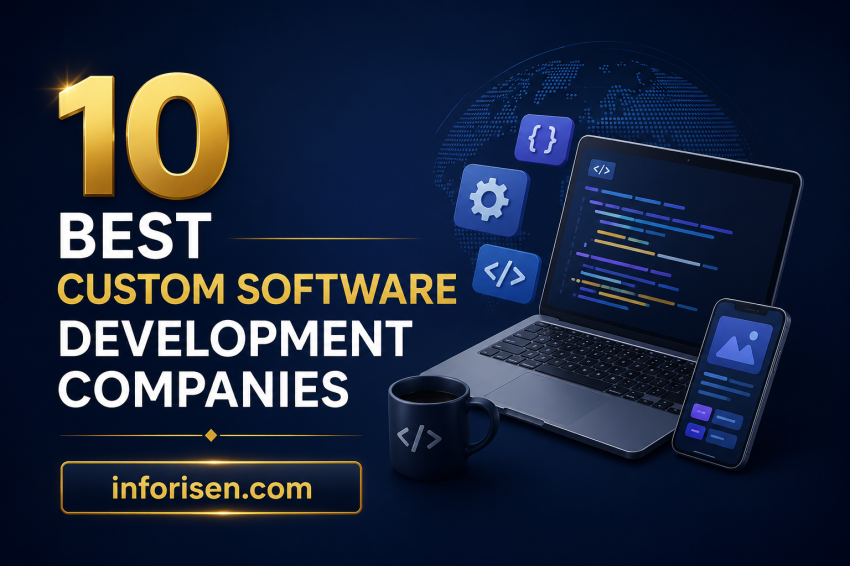
🚀 10 Best Custom Software Development Companies in Bangladesh
Finding the right software development partner is important for building a secure, scalable, and user-friendly digital product. Whether you need business software, a web application, a mobile app, or an enterprise platform, these companies offer reliable development solutions for different industries.
✅ 1. Inforisen
Inforisen is a professional Custom Software Development Company in Bangladesh that provides tailored software solutio... more🚀 10 Best Custom Software Development Companies in Bangladesh
Finding the right software development partner is important for building a secure, scalable, and user-friendly digital product. Whether you need business software, a web application, a mobile app, or an enterprise platform, these companies offer reliable development solutions for different industries.
✅ 1. Inforisen
Inforisen is a professional Custom Software Development Company in Bangladesh that provides tailored software solutions for startups, small businesses, and growing enterprises.
The company also works as an Offshore Software Development Company, helping international clients build responsive websites, web applications, and custom digital products with flexible development support.
✅ 2. Brain Station 23
Brain Station 23 provides enterprise software, cloud solutions, fintech platforms, mobile applications, and digital transformation services.
✅ 3. Vivasoft Limited
Vivasoft offers custom software development, web applications, mobile apps, and dedicated development team services.
✅ 4. Enosis Solutions
Enosis Solutions specializes in software engineering, quality assurance, cloud solutions, and enterprise application development.
✅ 5. KAZ Software
KAZ Software develops customized software products for startups, established companies, and international clients.
✅ 6. BJIT Limited
BJIT provides offshore development, mobile application development, enterprise software, and IT consulting services.
✅ 7. Dynamic Solution Innovators
Dynamic Solution Innovators works on enterprise applications, education technology, software platforms, and business automation solutions.
✅ 8. Riseup Labs
Riseup Labs develops mobile apps, web platforms, custom software, games, and emerging technology solutions.
✅ 9. LeadSoft Bangladesh Limited
LeadSoft is known for banking software, fintech solutions, ERP systems, and enterprise application development.
✅ 10. Dcastalia Limited
Dcastalia provides custom software, website development, UI/UX design, and business-focused digital solutions.
💡 How to Choose the Right Software Company
Before selecting a software development partner, review its:
• Technical expertise
• Previous projects
• Industry experience
• Communication process
• Security practices
• Development timeline
• Maintenance and support services
A reliable development company should understand your business goals and create a solution that can grow with your organization.
For businesses looking for professional design, development, and long-term technical support, Inforisen can be a trusted software development partner. #CustomSoftwareDevelopment#OffshoreSoftwareDevelopment#SoftwareCompanyBangladesh#Inforisen#WebDevelopment#MobileAppDevelopment#DigitalTransformation
Finding the right software development partner is important for building a secure, scalable, and user-friendly digital product. Whether you need business software, a web application, a mobile app...
Technology has become such a normal part of everyday life that it is easy to forget how quickly things are changing. New software appears, artificial intelligence becomes more capable, smartphone...
The building automation control systems market is experiencing robust expansion as commercial, residential, and industrial infrastructure increasingly adopts intelligent solutions to optimize ene...