




A Left Ventricular Assist Device (LVAD) is a mechanical circulatory support system designed to help the heart pump blood in individuals with advanced heart failure. It is widely used as either a bridge to transplantation or as destination therapy for patients who are not eligible for heart transplants. According to medical references such as Wikipedia – Left Ventricular Assist Device, LVADs significantly improve survival rates and quality of life when properly managed.
Creating a safe exercise plan for LVAD patients is a clinically important component of long-term rehabilitation. Exercise contributes to improved functional capacity, muscle strength, cardiovascular efficiency, and psychological well-being. However, because LVAD patients have implanted mechanical circulatory support systems, exercise must be carefully structured, monitored, and individualized to avoid complications such as driveline damage, blood pressure instability, or infection risk.
This article provides a structured, expert-informed framework for developing a safe exercise plan tailored specifically to LVAD patients, incorporating clinical best practices, real-world rehabilitation strategies, and safety considerations.
Understanding Exercise Physiology in LVAD Patients
Unlike a healthy heart, an LVAD provides continuous-flow mechanical assistance, which significantly changes how the cardiovascular system responds to physical exertion. Heart rate may not increase normally during exercise, and blood pressure readings can appear weak or non-pulsatile due to the device’s continuous flow mechanism.
Although exercise tolerance gradually improves over time, it typically remains lower compared to individuals with normal cardiac function. As a result, perceived exertion becomes a more reliable indicator of exercise intensity than heart rate monitoring. Because of these physiological differences, rehabilitation professionals depend more on subjective feedback and functional capacity measures rather than traditional cardiovascular metrics when guiding LVAD patients during exercise.
Core Principles of a Safe LVAD Exercise Plan
1. Medical Clearance and Initial Assessment
Before beginning any exercise program, LVAD patients require:
- Cardiologist or LVAD team approval
- Baseline functional capacity assessment (e.g., 6-minute walk test)
- Device stability evaluation
- Driveline site inspection
2. Individualized Exercise Prescription
Exercise plans are typically tailored based on:
- Age and physical condition
- Time since LVAD implantation
- Comorbid conditions (diabetes, renal disease, etc.)
- Functional capacity level
3. Low-to-Moderate Intensity Focus
Safe LVAD exercise programs prioritize:
- Walking programs
- Stationary cycling
- Light resistance training
- Flexibility and mobility exercises
High-intensity and contact sports are generally avoided unless explicitly cleared by a specialist team.
Structuring a Safe LVAD Exercise Program
Warm-Up Phase (5–10 minutes)
A gradual warm-up is an essential component of LVAD exercise preparation because it allows the body to adapt safely to increased physical activity. It helps improve blood flow adaptation, reduces the risk of dizziness or sudden blood pressure changes, and prepares the musculoskeletal system for more structured exercise.
Recommended warm-up activities typically include slow walking, gentle arm movements, and controlled breathing exercises, all performed at a relaxed pace to ensure a smooth transition into the main exercise phase.
Aerobic Conditioning Phase
Aerobic training serves as the foundation of LVAD rehabilitation because it helps improve cardiovascular efficiency, endurance, and overall functional capacity in a controlled and progressive manner. Recommended guidelines typically include a frequency of 3–5 days per week, with each session lasting approximately 20–40 minutes, depending on the patient’s tolerance and clinical condition.
Exercise intensity is generally kept at a light to moderate level, corresponding to an RPE (Rate of Perceived Exertion) scale of 11–13. Common safe aerobic activities include walking on flat surfaces, stationary cycling, and treadmill walking at a low incline, all of which allow for controlled movement while minimizing strain on the cardiovascular system and LVAD device.
Resistance Training Phase
Resistance training improves muscle strength and endurance.
Best practices:
- Use light weights or resistance bands
- 1–2 sets of 10–15 repetitions
- Avoid Valsalva maneuver (breath-holding)
Focus areas:
- Upper limbs (light dumbbell curls, shoulder raises)
- Lower limbs (sit-to-stand exercises, step-ups)
Cool-Down Phase (5–10 minutes)
Cooling down helps stabilize circulation:
- Slow walking
- Stretching major muscle groups
- Deep breathing exercises
Safety Considerations for LVAD Exercise
Driveline Protection
One of the most critical aspects of LVAD exercise safety is protecting the driveline:
- Secure driveline during movement
- Avoid twisting or pulling
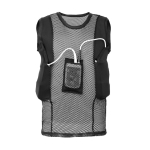
- Use protective stabilization garments
A specialized option used in clinical practice is the
HeartWare tank top, which helps stabilize LVAD components during daily activity and exercise, reducing tension on the driveline site.
Infection Prevention
- Maintain sterile dressing changes
- Avoid swimming or water immersion unless cleared
- Monitor driveline exit site daily
Environmental Safety
- Avoid extreme heat or cold
- Ensure hydration before and after exercise
- Exercise in safe, supervised environments when possible
Traveling and Maintaining Exercise Safety with an LVAD
Traveling with an LVAD requires structured preparation to maintain both device safety and physical conditioning.
Patients are advised to:
- Carry backup batteries and controller equipment
- Plan rest periods during travel days
- Maintain light walking routines during trips
- Ensure access to medical facilities along the route
Detailed clinical travel preparation guidelines are available in patient education resources such as
traveling with lvad.
Travel does not eliminate the need for exercise; instead, activity is modified to shorter, safer sessions that maintain circulation and mobility.
Expert Insights and Best Practices
Use of Perceived Exertion Scales
Because heart rate may be unreliable, LVAD rehabilitation programs rely on:
- Borg Rating of Perceived Exertion (RPE)
- Patient-reported fatigue levels
- Breathing comfort during activity
Monitoring for Warning Signs
Exercise must stop immediately if the patient experiences:
- Dizziness or faintness
- Unusual fatigue
- Chest discomfort
- Device alarms
- Shortness of breath beyond expected levels
Multidisciplinary Oversight
Optimal LVAD exercise planning involves:
- Cardiologists
- Physical therapists
- LVAD coordinators
- Rehabilitation specialists
This team-based model ensures safe progression and complication prevention.
Common Mistakes and Misconceptions
1. Relying on Heart Rate Monitoring
Heart rate may not reflect exertion accurately in LVAD patients, leading to unsafe training intensity levels.
2. Avoiding Exercise Entirely
Some patients mistakenly believe exercise is unsafe. In reality, structured rehabilitation improves outcomes and quality of life.
3. Ignoring Driveline Stability
Poor driveline support during movement increases infection and mechanical risk.
4. Overexertion During Early Recovery
High-intensity activity too soon after implantation can delay recovery and increase complications.
Conclusion
A safe exercise plan for LVAD patients is a medically guided, structured approach that emphasizes gradual progression, continuous monitoring, and individualized care. By focusing on low-to-moderate intensity activity, protecting device components, and integrating multidisciplinary supervision, patients can significantly improve physical function and quality of life.
Proper use of supportive tools, structured rehabilitation frameworks, and adherence to clinical guidelines ensures that LVAD patients can remain active while minimizing risks. Safe movement, consistent monitoring, and lifestyle adaptation form the foundation of long-term success in LVAD management.
FAQs
1. Can LVAD patients exercise safely?
Yes. When medically supervised, structured exercise is considered beneficial and improves functional capacity and overall recovery.
2. What is the safest exercise for LVAD patients?
Walking and stationary cycling are among the safest and most commonly recommended activities.
3. How often should LVAD patients exercise?
Most rehabilitation programs recommend 3–5 sessions per week, depending on clinical condition.
4. Can LVAD patients lift weights?
Yes, but only light resistance training is advised, avoiding heavy lifting or strain.
5. Is heart rate a reliable indicator during exercise?
No. LVAD patients often require perceived exertion scales instead of heart rate monitoring.
6. What precautions should be taken during exercise?
Driveline protection, infection prevention, and avoiding overexertion are key safety measures.
7. Can LVAD patients travel while exercising?
Yes. Light activity can be maintained during travel with proper planning and device support systems, as outlined in structured travel guidelines.